Category: Gaming

  • Best 144hz Gaming Laptops In Aug 2026!

    Best 144hz Gaming Laptops In Aug 2026!

    For hardcore gamers, there’s nothing more important than displays with high refresh rates. Screens like these were only accessible to monitors up until a few years ago. Today, you’re seeing gaming laptops with refresh rates that match some of the best monitors out there.

    What does a high refresh rate mean for a gamer though?

    1. Faster and smoother visuals
    2. Lesser graphic tears during gameplay and cinematics
    3. In-game character movement is a lot snappier

    Combine this high refresh rate with a high end graphics card, and you’ll get a gaming experience unlike any other. If you think high FPS gaming is not possible with gaming laptops or even mini ITX builds, you’ve thought wrong.

    Today, we’re looking at the best 144Hz gaming laptops, ranging from the compact 14″ to the large and in charge 17″. We’ve done hours of research and curated 13 powerful gaming laptops that offer 144hz refresh rate. These laptop can play the latest games and let you do video editing without breaking a sweat all thanks to the high end GPUs installed.

    Lenovo Legion 7i 16.0″

    King of the 144Hz Refresh Rate Gaming Laptop

    Lenovo Legion 7i 16.0 Best 144Hz Gaming Laptops

    Specs at a glance:

    • CPU: Intel Core i7-10750H
    • RAM: 16GB RAM
    • STORAGE: 1TB SSD
    • GPU: RTX 2060 6GB GDDR6

    Probably one of the best 144hz gaming laptops in this list is the Lenovo Legion 7i, and it shows. The laptop’s size is just as impressive as the hardware underneath. A 16-inch display compbined with an RTX 2060 should let you play most games at high settings.

    There’s a bit of thickness and heftiness to this laptop, measuring at 0.92×14.2×10.2 inches (HWD) with a weight of 5.5lbs. The display aspect ratio sits at 16:10 and fills up nicely across the screen. The sloped corners of the laptop are a lot slimmer than they look.

    Gaming performance is excellent with the combination of hardware you’re getting. AAA games such as Witcher 3 and Horizon Dawn should run smoothly at high settings.

    MSI GL66 15.6″

    Best Value 144Hz Gaming Laptop For Competitive Gaming

    MSI GL66 15.6 Best 144Hz Gaming Laptops

    Specs at a glance:

    • CPU: Intel Core i7-11800H
    • RAM: 16GB RAM
    • STORAGE: 512 GB SSD
    • GPU: NVIDIA GeForce RTX 3070

    The MSI GL66 sits at second place on this list for the best 144hz gaming laptops because it’s probably the best value gaming laptop for what you’re paying.

    The laptop design is just as impressive with a metal lid and RGB keyboard backlight, which is fully customizable by the way thanks to MSI Center Software. This is also an Nvidia GeForce RTX 3070 laptop which makes playing games or watching movies enjoyable. Gaming at 1080p is made possible with the combination of the Intel Core i7 processor and the RTX 3070, allowing the MSI GL66 to compete against the other high end gaming laptops on this list.

    Asus ROG Strix Scar G733

    A Beast Of A 144Hz Gaming Laptop With An AMD CPU

    Asus ROG Strix Scar G733 Best 144Hz Gaming Laptops

    Specs at a glance:

    • CPU: AMD Ryzen 9 5900
    • RAM: 64GB RAM
    • STORAGE: 2TB SSD
    • GPU: RTX 3080 16GB GDDR6

    Now, if you’re thinking about powerful gaming laptops, ASUS ROG is usually the first thing that comes to mind, or Alienware, or Razer Blade. But you’d be shocked to know what’s under the hood of the Asus ROG Strix Scar G733.

    Just from the specs alone should make the Asus ROG Strix Scar G733 the best gaming laptop in this list, and it is. There’s just a lot of power here with the combination of the AMD Ryzen 9 CPU and Nvidia GeForce RTX 3080. The 17.3″ display sets you up for a QHD resolution of 2560×1440 with 240Hz refresh rate. You also get 64GB of RAM with 2TB SSD for storage space. If money is not an issue for you, go for the Asus ROG Strix Scar G733.

    Asus ROG Strix G17 G712LW-ES74

    Mid Range 144Hz Refresh Rate Gaming Laptop

    Asus ROG Strix G17 Best 144Hz Gaming Laptops

    Specs at a glance:

    • CPU: 10th Gen Intel Core i7-10750H
    • RAM: 16GB DDR4 3200MHz
    • STORAGE: 512GB SSD
    • GPU: NVIDIA GeForce RTX 2070 8GB GDDR6 with ROG Boost

    We’re not playing favorites here, and it’s no pure coincidence that we have another Asus ROG gaming laptop on the list. The ROG Strix G17 G712LW-ES74 is just as powerful as its sibling, the Strix Scar G733. This bad boy comes with a 17.3″ 1080p display with an IPS panel and a low response time of 3ms.

    To get you the gaming experience that you need, the ROG Strix G17 G712LW-ES74 comes with an Intel Core i7-10750H backed by 16GB of RAM and the Nvidia RTX 2070 GPU. Sure, it’s not an RTX 3000 series laptop, but the ROG Strix G17 G712LW-ES74 supports the same DLSS and ray tracing capabilities.

    Apart from gaming, you should also be able to do some video editing or 3D modeling without straining the laptop too much. It’s what most gamers would consider a mid range gaming laptop, but don’t let them fool you into thinking that this also gives mid range performance.

    It may not be as powerful as the Razer Blade, or as the Strix Scar G733, but it should play a lot of AAA games at medium to high settings with minimal issues.

    Razer Blade 14

    A Powerful 14-Inch Gaming Laptop

    Razer Blade 14 Best 144Hz Gaming Laptops

    Specs at a glance:

    • CPU: AMD Ryzen 9 5900HX
    • RAM: 16GB RAM
    • STORAGE: 1TB SSD
    • GPU: Nvidia RTX 3070

    One might think that a 14-inch laptop could hardly handle enough hardware power to give you 144Hz refresh rates, let alone house an RTX 3000 series GPU. But the Razer Blade 14 is not to be underestimated. At this size, it doesn’t let you know how much power Razer can pack into something this small.

    You’ll be given two options for the Razer Blade 14: one with the RTX 3080 GPU and one with the RTX 3070. But regardless of what option you pick, they still outpower every other laptop on this list.

    Both versions are equipped with the AMD Ryzen 9 5900HX processor, 1TB of SSD, and 16GB RAM. The 14-inch screen consistently hits 144hz at 1080p resolution and scales up to 165hz in 1440p, giving you the sharpest visuals compared to any other laptop on here.

    There’s no doubt that the Razer Blade 14 is on the list for the best 144hz laptops. With those specs, casual and competitive gaming performance is guaranteed to be excellent.

    Acer Nitro 5 AN515-57-700J

    Budget Friendly 144Hz Gaming Laptop Under $1000

    Acer Nitro 5 AN515-57-700J Best 144Hz Gaming Laptops

    Specs at a glance:

    • CPU: Intel Core i7-11800H
    • RAM: 16GB RAM
    • STORAGE: 512GB SSD
    • GPU: Nvidia RTX 3050Ti

    Acer Nitro 5 is one of the few laptops on this list that gives you 144hz without reaching the $1000 price tag, making it the top choice for people who want to play games on the go but also carry with them a handy workstation.

    The Acer Nitro AN515-57-700J is Nitro 5 ‘s 15-inch models. The display sits at a max of 1080p resolution with a refresh rate of 144Hz and low response time of 3ms. You can also opt for the 17-inch models for Nitro 5, but they will end up costing more.

    When it comes to the specs, the Acer Nitro 5 AN515-57-700J is not to be underestimated. You might consider it to be the best laptop under $1000 because it has a high end GPU (an RTX 3050Ti, to be exact) and enough RAM and CPU to let you play games at high frame rates, do some video editing, or even office tasks.

    Lenovo Legion 5

    144Hz Gaming Laptop With Impressive Battery Life

    Lenovo Legion 5 Best 144Hz Gaming Laptops

    Specs at a glance:

    • CPU: AMD Ryzen 7 4800H
    • RAM: 16GB RAM
    • STORAGE: 512GB SSD
    • GPU: NVIDIA GeForce GTX 1660Ti

    Only a few gaming laptops out there could ever beat the Lenovo Legion 5’s battery life. At best, other gaming laptops can handle about 4 to 5 hours unplugged for normal use, and about a couple of hours unplugged for gaming or watching movies.

    But the Lenovo Legion 5 lets you hit up to 8.5 hours, which isn’t exactly game-changing but still double the duration compared to other laptops. And its battery life doesn’t even have you skimping on hardware too.

    The Lenovo Legion 5 comes with a GTX 1660Ti graphics cardso you can game on the go, and the Ryzen 7 4800H processor backed by 16GB of RAM should let you do creative tasks easily. Now it’s not the right laptop if you want to play AAA games on high settings. But if you just want something for daily use and casual gaming, the Lenovo Legion 5 is a good option.

    Asus ROG Zephyrus M GU502GU-XB74

    A Thin But Powerful 144Hz Gaming Laptop

    Asus ROG Zephyrus M GU502GU-XB74 Best 144Hz Gaming Laptops

    Specs at a glance:

    • CPU: Intel Core i7-9750H 2.6GHz
    • RAM: 16GB RAM
    • STORAGE: 512GB SSD
    • GPU: GeForce GTX 1660Ti

    Let’s get one thing straight here: the Asus ROG Zephyrus M GU502GU may be thin but it’s not underpowered. The laptop design may be sleek but it has enough power underneath to compete against other laptops with high end GPUs.

    With a Core i7 CPU and 16GB of RAM and a GeForce GTX 1660Ti graphics card, the Asus ROG Zephyrus M GU502GU can’t be beat. It has enough power to let you play some of the latest games, granted some of them might be at lower settings, but who’s complaining?

    It’s portable and lightweight, making it the best traveling partner for the gamer or office worker on the go. It has more power to let you carry out office and other creative tasks without breaking a sweat.

    Acer Predator Helios 300

    Overpowered and Underrated 144Hz Gaming Laptop

    Acer Predator Helios 300 Best 144Hz Gaming Laptops

    Specs at a glance:

    • CPU: Intel Core i7-11800H
    • RAM: 16GB DDR4
    • STORAGE: 1TB SSD
    • GPU: NVIDIA RTX 3060

    Acer Predator Helios 300 is what we’d consider to be a solid buy if you’re looking for the right laptop with enough hardware for high end gaming performance. If you’re torn between the Acer Nitro 5 and the Acer Predator Helios 300, go for the latter.

    You have two options for the Acer Predator Helios 300: one at 15.6″ and one at 17.3″. Both have refresh rates of 144Hz and have better displays than most of the other gaming laptops on the list.

    With an Nvidia RTX 3060 and an 11th-gen Intel Core i7, you should be able to play the latest games for this mid range laptop.

    Alienware m17 R4

    Another Midrange 144Hz Gaming Laptop

    Alienware m17 R4 Best 144Hz Gaming Laptops

    Specs at a glance:

    • CPU: Intel Core i7-10870H
    • RAM: 16GB RAM
    • STORAGE: 1TB SSD
    • GPU: NVIDIA GeForce RTX 3060

    Of course, we’re never going to deny the fact that we have an Alienware on this list. More importantly, the Alienware M17 R4 is the candidate for one of the best 144hz gaming laptops.

    Let’s talk about the laptop design first because we’re just so impressed with the optomechanical keyboard. The Alienware M17 R4 comes with a cherry-switch mechanical keyboard, which is something that’s not found in a lot of gaming laptops.

    This is a midrange beast with high end specs. You get a Core i9 CPU, an RTX 3080 graphics card, and enough power to let you run most games at high settings. It shows too. The Alienware M17 R4 is a beast in terms of size too.

    Acer Predator Triton 300 SE

    Another Budget Friendly 144Hz Laptop

    Acer Predator Triton 300 SE Best 144Hz Gaming Laptops

    Specs at a glance:

    • CPU: Intel 4-Core i7-11375H
    • RAM: 16GB RAM
    • STORAGE: 512GB SSD
    • GPU: NVIDIA GeForce RTX 3050Ti 4GB

    The Acer Predator Triton 300 SE is another budget-friendly option for different people. It’s the right laptop for casual players who want a traveling gaming gadget, or a hardcore gamer who don’t want to splurge on a gaming laptop, or even the artist who want enough power to run creative tasks.

    The Acer Predator Triton 300 SE bears a 14-inch screen, which puts it right up against the Razer Blade 14. But just because it’s more affordable than the Razer Blade 14 doesn’t mean it’s underpowered too.

    It runs on a Core i7 processor combined with an RTX 3050Ti graphics card, stacked with 16GB RAM and 512GB SSD. Gaming is smoother than it looks even with its high refresh rate and high resolution display.

    MSI Katana GF66

    Another Budget Friendly 144Hz Gaming Laptop Option

    MSI Katana GF66 Best 144Hz Gaming Laptops

    Specs at a glance:

    • CPU: Intel Core i7-11800H
    • RAM: 16GB RAM
    • STORAGE: 1TB SSD
    • GPU: NVIDIA GeForce RTX3050 TI

    Cutting into the list is the MSI Katana GF66, which is another budget friendly option for both hardcore gamers and casual gamers alike. The hardware specs aren’t exactly as impressive as the other high end laptops on this list, but for the price you’re paying here, the MSI Katana GF66’s specs make the most sense.

    You’re looking at a Core i7 processor with 16GB of RAM and 1TB SSD, and to top it off, you have the RTX 3050Ti. All in all, it’s mid range power stacked into one amazing affordable laptop. But we’re disappointed with the battery life and the screen display is less vivid compared to the others on here. You’re going to want to go for the high end variants of the MSI Katana GF66, which are equipped with RTX 3060. But with the 3050Ti, gaming experience shouldn’t even be an issue unless you’re running at higher resolutions.

    But make no mistake, the MSI Katana GF66’s 144hz refresh rate is just as impressive. You’re probably looking at high resolution gaming at 60fps or higher. The MSI Katana GF66 is what we’d consider the 144hz laptop for the budget conscious gamer.

    Razer Blade 15

    Another 15.6 Inch Powerhouse With 144Hz Refresh Rate

    Razer Blade 15 Best 144Hz Gaming Laptops

    Specs at a glance:

    • CPU: 11th Gen Intel 8-Core i7
    • RAM: 16GB RAM
    • STORAGE: 1TB SSD
    • GPU: Three variants: RTX 3060, 3070, or 3080

    Last but definitely not the least, we have the Razer Blade 15, which is just as competitive as its smaller brother, the Razer Blade 14. This is also the high-end option for those who don’t mind paying for premium hardware.

    There are three variants to choose from, if we’re talking about the GPU options. You’ll get the RTX 3060 starting at $2,399 and RTX 3080 starting at $3,698. For the latter, the RTX 3080 is paired with the 12th Gen Intel 14-Core i7 CPU, delivering the most power and lets you take advantage of the high end QHD screen’s refresh rate and high resolution.

    If you want more power and more portability, you can go for the 14″ version if you really fancy the Razer laptops. But if you don’t mind lugging in a few extra pounds with you, Razer Blade 15 is a solid choice from the other best 144hz laptops on the list.

    Which Is Better For Gaming Experience – 120Hz Laptop or 144Hz Refresh Rate?

    When it comes to choosing a gaming laptop, a high enough refresh rate is one of the biggest considerations. While you’re not exactly replicating the kind of power you may have on your gaming rig, you can still get a high end laptop with a full sized keyboard and Full HD or QHD display that outmatches commercial pre-built gaming PCs.

    Ideally, gamers want a high refresh rate so they get the gaming experience at the desired FPS they want. In this case, if they want to achieve 120fps gaming, they’d need at least a 120Hz refresh rate. The laptops we have on this list are some of the best 144Hz laptops, so there’s no doubt that you can’t go wrong with whatever you’re choosing.

    Take note that you will go through diminishing returns as you go higher. This means that a 144Hz laptop might not have that much difference compared to a 240Hz laptop, but the difference between a 60Hz laptop and a 144Hz will be more pronounced. But all things should be considered when buying any one of the best 144hz laptops on this list. If you don’t have enough hardware power on that 144Hz laptop, your gaming performance might diminish.

    What Are Things To Consider When Purchasing 144Hz Laptops?

    If you want to get the best gaming experience possible, you should buy the right 144Hz gaming laptop for you. There are 13 best 144hz laptops on this list, each more powerful than the other in terms of hardware with some being more portable.

    Gaming Laptops Are Always Pricey

    The engineering behind the best gaming laptop, 144hz or not, is mind-boggling to say the least. How do you compact so much power into a chassis that’s roughly 20″ or smaller? This is why gaming laptops are expensive, to begin with.

    When we’re talking about the best gaming laptop, ideally you want the high end specs packed into a small chassis, much like the Razer Blade lineup or the Asus ROG Strix lineup. For this kind of compromise, you’re expected to pay at least a couple thousand dollars. They’re more than enough to compete with any gaming PC in the market, but you have to manage your expectations. Like a gaming PC, hardware also matters when it comes to pricing for a gaming laptop but not as much. You still end up paying less for an RTX 3080 laptop as you would with a gaming PC.

    There are also budget-friendly options on this list that will still have you paying a thousand bucks or so, but at least they’re not going to bankrupt you.  

    The Right Model Matters For Gaming Experience

    If you want the best bang for your buck, you need to find the right model for you. When it comes to choosing the best 144hz gaming laptops, you have to choose between power and portability, but never both. Technically you can, but you end up paying more, like the Asus ROG Strix Scar or the Alienware M4 laptops.

    Now going for power means that you might be foregoing portability because you’ll end up with a bigger laptop. This is because you need enough space to handle a big GPU or enough room for proper ventilation. A good example here would be the Alienware brand, and not just limited to their 144Hz laptop. They don’t really shy away from making heavy and giant laptops because they pack so much power into them.

    On the other side of the spectrum, going for portability might have you foregoing power. Portability does have an advantage because some of the budget friendly options here on this list are just that: portable. But with a budget gaming laptop, you need to manage your expectations because you’re choosing size over power.

    When you’re going for portability, you’re going for a laptop with a midrange GPU or less storage than their bigger counterparts mostly because of the chassis’ limitations to accommodate large components. But once again, you can go for both size and portability. The Razer Blade 14 is a good example of a portable but powerful gaming laptop, but you do end up paying more.

    Which is Better? 1080p Resolution or 1440p Resolution?

    If you’re a competitive gamer who’s into first person shooters, then you’ll know that 1080p resolution will always be the king, even though 1440p is becoming the new standard for gaming resolution. The latter has you focusing more on an immersive gameplay as opposed to making every last frame work.

    Any laptop with less than a 17-inch screen would probably be better off with a 1080p resolution because going higher than that might not make a lot of difference, at least visually. If you’re the type of gamer who wants to keep that FPS at 120 or higher, you’ll probably want a 15″ laptop with 1080p display. If you can afford it, go for a 17″ screen with 1440p resolution.

    Do 4K Gaming Laptops Exist?

    Because we’ve listed all the best 144hz laptops on here, you’re probably thinking: do 4K gaming laptops even exist? And the answer is YES! But before you get excited with buying one, allow us to explain why you shouldn’t.

    It makes little to no sense to getting a 15″ laptop with 4K display, unless there’s a specific need for you to carry a portable gadget that can give you that. You’re just wasting money at this point, if you ask me. Even if you’re getting a 17″ laptop, 4K gaming is more of a luxury at this point. Playing ultra settings on demanding games on a 4K laptop is just too demanding, so you end up not getting the FPS that’s acceptable for you. Remember that you are running high end hardware on limited space with limited ventilation and cooling options. You’re not even coming close to what you actually need on a PC to allow you to game at 4K or higher resolutions with an IPS Panel at 60fps.

    At the end of the day, if you have the money to burn and you simply want to carry around a laptop that you can brag to your gamer buddies, then by all means, go for the 4K gaming laptops instead. Some of the best gaming laptops in the market right now have 4K resolution, but don’t be shocked by their price tags.

    Cooling Issues and Noise Issues

    Let’s say you have a gaming laptop and gaming PC with the same hardware. 12th Generation CPU with RTX 3080 GPU, 32GB of RAM, and 1TB of SSD. Put on a visually demanding game and run it at Ultra settings, and you’ll see that the gaming laptop will probably dip in FPS at some point. This is due to the fact that the laptop’s hardware will need perform at max capacity to meet the demands of the game. But to prevent overheating, performance is affected when the laptop’s software has them regulating both CPU and GPU. In other words, either CPU or GPU, or even both, will be slowed down to some extent to let the laptop breathe a little.

    It goes without saying that gaming on a laptop, no matter how powerful or portable it is, is going to be hot and noisy. At the very least, running an AAA game on high settings on any one of the laptops listed on here might make them sound like there’s a small car running around in your room or office. But for doing office tasks, creative tasks, or entertainment-related activities, noise shouldn’t even be an issue at this point for any of the laptops listed here.

    High performance hardware on a laptop means more heat is generated due to the fact that you don’t have enough space for proper air flow to dissipate heat. Alienware and Razer both have their methods for dissipating heat. This includes the building of their chassis with heat-resistant materials such as aluminum or a mix of aluminum and other plastic.

    A gaming PC with a full tower case and on liquid cooling system with enough vents to properly let air in and out of the case will not be bothered by such issues, unless you overclock the CPU or GPU components.

    What Do We Recommend?

    Out of the 13 144hz refresh rate laptops on here, we have made our choices for the best laptops that give you the best gaming experience possible.

    For The Budget Conscious Gamer

    We recommend the MSI Katana GF66 for several reasons, but the biggest reason is that you’re getting an RTX 3000 series GPU. Its 1TB SSD should let you store enough games and videos on here without forcing you to delete some of them to make room for new ones.

    If the MSI Katana GF66 is not accessible to you for whatever reason, a good second option is the ROG Strix G17 G712LW-ES74. It’s a midrange gaming laptop with a lot of power underneath.

    For The Gamer With Money To Splurge

    If you have the money to splurge, the Asus ROG Strix Scar G733 is probably the best choice on here. You’re getting 64GB of RAM and an RTX 3080 graphics card. That’s almost as powerful as any workstation in the market. We’d probably bet it’s one of the best gaming laptops in the market right now too for the specs that it has.

    Final Words

    There you have it. 13 of the best 144Hz gaming laptops that you can find in the market right now. We’ve chosen them based on power, portability, and their capacity to be both. You’ll find solid options for the budget route, and you’ll find other laptops on here if you want to splurge money.

  • 8 Best RTX 3060 Laptops Worth Investing In (Aug 2026)

    When we’re talking about the best graphics card within the mid-range performance spectrum, nothing else comes to mind than Nvidia GeForce RTX 3060. At 3,840 CUDA Cores and 6GB GDDR6 VRAM, it’s no surprise that every gamer wants this video card.

    But availability of the RTX 3060, along with the RTX 3070, RTX 3080, and RTX 3090 are limited. So much so that you just have to purchase prebuilt PCs that have these GPUs, or gaming laptops that are equipped with these cards.

    Today, we’re rounding up the best RTX 3060 laptops you could get your hands on. Here’s a quick table to help you navigate this list:

    [affiliatable id=’115906′]

    ASUS TUF Gaming F15

    Best Overall RTX 3060 Gaming Laptop

    ASUS TUF Gaming F15 Best RTX 3060 Gaming Laptop

    What’s Inside?

    • Display: 15.6-inch Full HD (300Hz)
    • Processor: Intel Core i7-12700H
    • Graphics: NVIDIA RTX 3060 6GB VRAM
    • RAM: 16GB DDR5
    • Storage: 1TB NVMe SSD
    • Price: $1,499.99

    At the top of our list is the ASUS TUF Gaming F15, simply because it’s the best overall RTX 3060 laptop in the market right now. As a leading digital publisher, ASUS has a few RTX 3060 laptops in their roster of gaming laptops.

    Talking about the ASUS TUF Gaming F15, there’s a lot of power underneath this sleek laptop. The ASUS TUF Gaming F15 comes with a 14-core Intel Core 17-12700H processor, 16GB DDR5 RAM, and a 1TB NVMe SSD. All of these hardware combined with the RTX 3060 makes for one powerful laptop that can handle the latest AAA games with ease.

    The display of the ASUS TUF Gaming F15 is just as impressive, sitting at 15.6 FHD with a 300Hz refresh rate. No big deal considered this is the standard for display size when it comes to gaming. At 1080p gaming, it doesn’t even break a sweat. Think of the ASUS TUF Gaming F15 as a mini desktop PC that you could fit inside your backpack.

    One thing that we have to point out here is that the ASUS TUF Gaming F15 comes with a thermal cooling function for when you want to do some extreme gaming sessions. Despite being housed in plastic, the ASUS TUF Gaming F15 is durable enough. The heating is manageable thanks to the plastic material’s heat reduction capability and the laptop’s cooling system.

    All in all, this is probably one of the best gaming laptop deals you’ll ever see anywhere because it comes with a price tag of $1,500 (or less, depending on where you’re shopping).

    Asus ROG Strix G17

    Most Powerful RTX 3060 Gaming Laptop

    Asus ROG Strix G17 Best RTX 3060 Gaming Laptop

    What’s Inside?

    • Display: 17.3-inch 1920 x 1080p (144Hz)
    • Processor: AMD Ryzen 9 5900HX
    • Graphics: NVIDIA GeForce RTX 3060
    • RAM: 16GB DDR4
    • Storage: 512GB NVMe SSD
    • Price: $1,695.00

    Arguably, second to the ASUS TUF Gaming F15 is the ASUS ROG Strix G17. If you’re looking for good gaming laptop deals, the ASUS ROG Strix G17 should be on your list.

    Unlike the TUF Gaming F15, the ASUS ROG Strix G17 uses an AMD Ryzen 9 5900HX processor with a clock speed of 3.3GHz (but can be overclocked to 4.6GHz). This makes it the most powerful laptop on this list that runs on an RTX 3060 graphics card. We say it’s powerful because you can overclock the processor to give you more power for gaming or for editing/rendering.

    For the screen size, the ASUS ROG Strix G17 boasts of a 17.3 FHD screen at 1920x1080p resolution with a 144Hz high refresh rate. You can literally play any AAA game at 1080p sitting at about 40+ FPS without making the laptop work a lot. This is made possible with the 16GB DDR4 RAM and the 512GB NVMe SSD. Portability and power form the backbone of the ASUS ROG Strix G17. All of this combined with the RTX 3060 can just make you run the most demanding games with ease.

    Just like the TUF Gaming F15, the ASUS ROG Strix G17 does not have any heating issues, giving other laptops of the same specs a run for their money. The overall build of the laptop is decent enough and worth the $1,695 you’re going to pay.

    Acer Predator Helios 300

    Second Best Overall RTX 3060 Laptop

    Acer Predator Helios 300 Best RTX 3060 Gaming Laptop

    What’s Inside?

    • Display: 15.6-inch FHD 1920 x 1080p (144Hz)
    • Processor: Intel i7-11800H
    • Graphics: NVIDIA GeForce RTX 3060 6GB
    • RAM: 16GB DDR4
    • Storage: 512GB NVMe SSD
    • Price: $1,299.99 −$74.54 $1,225.45

    If you can’t get your hands on an ASUS TUF Gaming F15 laptop or an ASUS ROG Strix G17, there’s nothing wrong with settling for second best. And that laptop is the Acer Predator Helios 300.

    Make no mistake, just because it’s second best doesn’t mean mediocre specs The Acer Predator Helios 300 comes with an Intel i7-11800H processor, 16GB DDR4 RAM, and 512GB NVMe SSD. If it’s power you’re looking for, this is the RTX 3060 laptop you should set your eyes on.

    The Acer Predator Helios 300’s display measures at 15.6 FHD capable of 1920×1080 resolution, with a 144HZ high refresh rate. What really sets the Acer Predator Helios 300 apart from other future brands is its 100% color-accurate panel and good color calibration. This makes the Acer Predator Helios 300 a good choice for playing massive open-world AAA games.

    Priced at $1,300, you really can’t complain about what you’re getting. If you’re not a full-on gamer, the Acer Predator Helios 300 can power through productivity tasks or content-related (video-editing) tasks without difficulty.

    MSI Creator 15

    Best RTX 3060 Laptop For Content Related Tasks

    MSI Creator 15 Best RTX 3060 Gaming Laptop

    What’s Inside?

    • Display: 15.6-inch 4K UHD 3840 x 2160p
    • Processor: Intel Core i7-11800H
    • Graphics: NVIDIA GeForce RTX 3060
    • RAM: 16GB DDR4
    • Storage: 512GB NVMe SSD
    • Price: $1,849.00 −$450.00 $1,399.00

    On this is list is the MSI Creator 15, the best gaming laptop you could ever get for creating content, and do some intense gaming sessions while you’re at it too.

    The MSI Creator 15 may be for content creation, but it doesn’t lag behind when it comes to full gaming tasks too. The MSI Creator 15’s processor is an Intel Core i7-11800H, sitting at 8-cores with 16 threads supported by hyperthreading. This makes it the perfect laptop for any multithreading task. To put it simply, video editing and 3D is going to be a breeze.

    Another reason why this is the best laptop for content creation is its display. The MSI Creator 15 carries a 15.6-inch 4K UHD OLED Display at 3840×2160 resolution with 100% sRGB coverage. Whether it’s doing Photoshop work, 3D-rendering with Blender, game development or gaming at 4K resolution, the MSI Creator 15 is the perfect partner.

    MSI Stealth 15M

    Best Value RTX 3060 Gaming Laptop

    MSI Stealth 15M Best RTX 3060 Gaming Laptop

    What’s Inside?

    • Display: 15.6-inch Full HD (144Hz)
    • Processor: Intel Core i7-11375H
    • Graphics: NVIDIA RTX 3060 6GB
    • RAM: 16GB DDR4
    • Storage: 512GB NVMe SSD
    • Price: $1,399.00 −$249.01 $1,149.99

    Here we have another gaming laptop from MSI: the MSI Stealth M15M. Much like the MSI Creator, the MSI Stealth M15M carries an 11th generation INtel Core i7-11375H processor. This is a quad-core CPU with clock speeds at 3.0GHz at its lowest and can be overclocked to about 5.0GHz, made possible with Intel’s Turbo Boost Technology.

    MSI Stealth M15M was made with the intention of selling this to people who game and travel a lot. The laptop comes with a 15.6inch 144Hz screen with 16GB DDR4 RAM. What’s really impressive about the MSI Stealth M15M is that it only weighs 3.73lbs, which makes it one of the lightest gaming laptops in the market. Other features also include an RGB backlit keyboard with Anti-Ghost Key that helps you a lot in first-person shooters, along with essential ports such as 2 USB 2.0 ports, 1 USB 3.0 ports, one USB Type C 3.1 Gen 1 port, and HDMI output.

    But with this size constraint, you’re trading in portability for battery life. While it’s not really an issue, it might be a disappointment for some gamers who’re on the move a lot. Compared to the Razer Blade laptops (noted for being sleek and lightweight), the laptop lasts for 4 to 5 hours on normal usage (i.e. non-gaming tasks, or productivity tasks). If you’re gaming, battery life should probably be about a couple of hours max. But it’s not highly recommended to game without plugging in because you’ll be running on the gaming laptop’s onboard GPU (and not on the RTX 3060).

    All in all, the MSI Stealth M15M gaming laptop is still a good investment for gamers who travel a lot.

    ASUS ROG Zephyrus G14

    Best RTX 3060 Laptop For Gaming AND Productivity

    ASUS ROG Zephyrus G14 Best RTX 3060 Gaming Laptop

    What’s Inside?

    • Display: 14-inch IPS 1920 x 1080p (144Hz)
    • Processor: AMD Ryzen 9 5900HS
    • Graphics: NVIDIA GeForce RTX 3060 6GB
    • RAM: 16GB DDR4
    • Storage: 1TB NVMe SSD
    • Price: $1,379.99

    ASUS ROG, much like the Razer Blade line of laptops, doesn’t hold back its punches when it comes to creating gaming laptops. On this list of the best RTX 3060 laptops, we have the ASUS ROG Zephyrus G14.

    This beast is powered by the Ryzen 9 5900HS Processor with clock speeds at 3.0GHz, going all the way up to 4.6GHz. To further boost its gaming power and performance, the ASUS ROG Zephyrus G14 comes with 16GB DDR4 RAM and 1TB NVMe SSD.

    On the display side of things, the ASUS ROG Zephyrus G14 possesses a 14-inch Full HD display with 144Hz refresh rate with 1920x1080p resolution. Needless to say, you’re going to be gaming with perfect viewing angles and crystal picture reproduction.

    Like the MSI Stealth 15M, the ASUS ROG Zephyrus G14 is a 14-inch laptop with slim bezels. It fits easily in a messenger bag or in a laptop bag. The battery life is also good for doing day-to-day productivity tasks. But when you’re plugged in, expect to do some 4K photo editing, game development, and high-res gaming without breaking a sweat.

    Our verdict: the ASUS ROG Zephyrus G14 is a good purchase for a gaming laptop under $1,500. Portability combined with power has never been executed this well.

    Acer Nitro 5

    Most Affordable 17.3 RTX 3060 Laptop

    Acer Nitro 5 Best RTX 3060 Gaming Laptop

    What’s Inside?

    • Display: 17.3-inch Full HD (144Hz)
    • Processor: AMD Ryzen 7 5800H
    • Graphics: NVIDIA RTX 3060 6GB VRAM
    • RAM: 16GB DDR4
    • Storage: 1TB NVMe SSD
    • Price: $1,538.99

    If you’re looking for a budget gaming laptop that still packs an RTX 3060 GPU, the Acer Nitro 5 is your best choice. The laptop is equipped with an AMD 5000 Series Ryzen 7 5800H processor along with a 6GB RTX 3060 video card. The processor’s clock speeds ranges from 3.2GHz (base speed) and can go as high as 4.4GHz when overclocked.

    To help you run the most demanding games in the market right now, the Acer Nitro 5 comes with a 16GB DDR4 RAM and 1TB NVMe SSD. Load times are going to be so fast, you won’t have time to run to the freezer to get a drink.

    Enough about the power. Let’s talk about the Acer Nitro 5’s display. It comes with a 17.3-inch Full HD display that allows for 1920x1080p resolution with a high refresh rate of 144Hz. Gaming has never looked so good with this kind of display in a machine that competes fairly well against a typical gaming PC.

    Dell Alienware M15 R6

    Best RTX 3060 Laptop From Dell

    Dell Alienware M15 R6 Best RTX 3060 Gaming Laptop

    What’s Inside?

    • Display: 15.6-inch 1440 x 2560p (240Hz)
    • Processor: Intel Core i7-11800H
    • Graphics: NVIDIA GeForce RTX 3060
    • RAM: 16GB DDR4
    • Storage: 512GB NVMe SSD
    • Price: $1,669.86

    It’s not exactly breaking news when we include the likes of Alienware on this list. Dell Alienware is a pioneer in the field of gaming laptops, and they’ve come a long way when it comes to the power they bring to each laptop.

    For an RTX 3060 gaming laptop, they have the Alienware M15 R6. This gaming laptop runs on an Intel Core i7-11800H processor combined with a 16GB DDR4 RAM and 512GB NVMe SSD for storage. It goes without saying that running demanding games on the Alienware M15 R6 is going to be a breeze.

    But it’s not just power being brought to the table. Like its predecessors, the Alienware M15 R6 has a 15.6-inch QHD Display with a 240Hz refresh rate for gaming. The display resolution goes as high as 1440x2560p, which gives you 50% sharper visuals compared to an average gaming laptop with FHD laptop. If you’re particular about how your game looks, this is the gaming laptop to help you satisfy those high-resolution cravings.

    The Bottom Line

    There you have it! 8 of the best RTX 3060 gaming laptops you could ever get your hands on. Each gaming laptop on this list is just as powerful as the next one, and it boils down to your preference. Do you want to sacrifice a little bit of power for more portability, or do you want to have a gaming laptop that’s just nothing but raw power?

    Whatever your choice is, purchasing any of these laptops listed above is a great move and investment.

  • 7 Of The Best RTX 3070 Laptops You Shouldn’t Ignore (Aug 2026)

    Gaming laptops have come a long way, and we’re seeing the peak of extreme computing power that fits right inside your bag.

    These machines that we’re about to go through are equipped with the RTX 3070, one of the most sought-after video cards. PC owners are unable to find any stock of RTX 30XX series, so they often resort to purchasing prebuilt RTX 3080 gaming PCs, or any PC with a RTX 30XX GPU built in.

    But what’s the best RTX 3070 laptop in the market right now? We’ve narrowed it down to six models coming from the top brands in the industry.

    [affiliatable id=’115911′]

    Eluktronics MAX 17

    The Best RTX 3070 Laptop In The Market

    Eluktronics Max 17 RTX 3070 Gaming Laptop

    What Are The Specs Inside?

    • CPU: 3.3GHz AMD Ryzen R9 5900HX
    • RAM: 32GB
    • Storage: 1TB SSD
    • Display: 17.3-inch QHD (‎2560 x 1440)
    • GPU: 8GB NVIDIA GeForce RTX 3070
    • Battery: Up to 12 hours

    The first on this list is considered to be the best RTX 3070 laptop by several in depth reviews, and we’re about to find out why.

    Introducing the Eluktronics MAX 17, a laptop with the best GPU-CPU combo possible with the best portability and some cool looking RGB features. Despite being a powerhouse of a unit, it manages to stay slim and bears a lightweight design, coming in at 5LBs (2.2kgs) excluding the power brick.

    The Eluktronics MAX 17 comes equipped with the Ryzen 5900HX and is able to carry out both gaming-related and content-related tasks with ease. The GPU power alone gives you enough juice to run games at ultra high settings. Of course, this is also made possible with 32GB of RAM and a 1TB SSD to run things as fast as possible.

    Apart from the impressive graphics card and computing power, the display is also impressive in its own right. The monitor is a QHD (2560×144) resolution with 165Hz refresh rate and measures at 17.3 diagonally.

    If you’re looking for a solid balance of workstation capabilities with extreme gaming power, the Eluktronics MAX 17 is worth looking into.

    Alienware M15 R6

    The Best Alienware Gaming Laptop With RTX 3070

    Alienware M15 R6 RTX 3070 Gaming Laptop

    What Are The Specs Inside?

    • CPU: 1.9GHz Intel Core i7-11800H
    • RAM: 16GB
    • Storage: 512GB SSD
    • Display: 15.6-inch QHD (‎2560 x 1440)
    • GPU: 8GB NVIDIA GeForce RTX 3070
    • Battery Life: Up to 4 hours

    Next on the list is Alienware M15 R6, and it’s not exactly breaking news that the Alienware is on this list. The brand itself remains to be one of the best and most trusted partners for gamers all over the world.

    Enough about the brand, let’s talk about the laptop. The Alienware M15 R6 comes with an 11th-gen Intel i7 CPU, a 512GB SSD, and of course, an RTX 3070 graphics card. Unlike the Eluktronics gaming laptop, the Alienware M15 R6 is equipped with a mechanical keyboard, with each key being robust enough to sustain heavy tapping and pressing during intense PC gaming sessions.

    But what’s really awesome about the Alienware M15 R6 is its cooling system. Their cooling system literally sets them apart from any other RTX 3070 laptop out there. The laptop runs on their Cryo-tech system with big vents. Even if you’re running ultra high settings for the most demanding games, the laptop won’t feel hot to the touch.

    A robust laptop with guaranteed excellent performance all-around, the Alienware M15 R6 is a beast and makes for the best portable gaming gadget around.  

    GIGABYTE AORUS 15G XC

    Best Gigabyte Aorus Gaming Laptop

    GIGABYTE AORUS 15G XC Laptop

    What Are The Specs Inside?

    • CPU: 2.2GHz Intel Core i7-10870H
    • RAM: 32GB
    • Storage: 512GB SSD
    • Display: 15.6-inch FHD (‎1920 x 1080)
    • GPU: 8GB NVIDIA GeForce RTX 3070
    • Battery Life: Up to 8 hours

    Here we have another leading digital publisher on the list, GIGABYTE. Their entry into the best RTX 3070 laptop comes in the form of the GIGABYTE AORUS 15G XC.

    Their gaming laptop comes equipped a 10th Gen Intel Core 17-10870H (unfortunately, it doesn’t have the 11th gen Intel core that other brands are running), 32GB DDR4 RAM, and 512GB SSD. If not for the two other laptops listed above, the GIGABYTE AORUS 15G XC would’ve been garnered the title of best RTX 3070 laptop.

    The GIGABYTE AORUS 15G XC gaming laptop bears a 15.6″ screen, which is smaller than the rest but don’t laugh at it. The GIGABYTE AORUS 15G XC also has a full-sized responsive keyboard with lots of space in between, so you don’t have to worry about misclicking.

    Of course, the RTX 3070’s total graphics power is only complemented with its CPU, but it’s not nearly as impressive given that it’s only a 10th Gen intel core. But don’t worry, the GIGABYTE AORUS 15G XC is still powerful enough to run games at ultra high settings without breaking a sweat.

    MSI GL66

    Cheapest RTX 3070 Gaming Laptop In The Market

    MSI GL 66 RTX 3070 Gaming Laptop

    What Are The Specs Inside?

    • CPU: 1.9GHz Intel Core i7-11800H
    • RAM: 16GB
    • Storage: 512GB SSD
    • Display: 15.6-inch FHD (1920 x 1080)
    • GPU: 8GB NVIDIA GeForce RTX 3070
    • Battery Life: Up to 3 hours

    The MSI GL66 is an impressive gaming laptop in terms of price and power. In terms of price-to-performance ratio, nothing else comes close to MSI GL66 and believe us when we say that this gaming laptop has more to it than its price tag.

    It may cost you less than $1,500, which is quite possibly one of the best gaming laptop deals you could ever land on, but don’t underestimate the MSI GL66. The CPU is a 1.9GHz Intel Core i7-11800H, which is far from what we’re accustomed to seeing in a typical RTX 3070 laptop. But this is expected given the laptop’s price tag, so the tradeoff was well worth it.

    But it’s not only the CPU power that’s affected by the price tag. The battery life of the MSI GL66 is only about three hours, and it doesn’t have that much of a cooling system. Still, it bears one of the best brands of graphics cards in the market right now.

    CPU-wise, it still delivers power to reliably handle AAA games with ease. The laptop’s RAM sits at 16GB with 512GB of storage. Granted, you’re not going be able to store all of the AAA games without deleting a few of them.

    But if you’re after a compact video editing machine, the Razer Blade 14 is the better alternative. However, if you want a compact yet powerful gaming machine for less than $1,500 and the underpowered CPU (at least compared to other brands) does not bother you, you really can’t go wrong with MSI GL66.

    Razer Blade 14

    A Robust 14-Inch RTX 3070 Laptop

    Razer Blade 14 RTX 3070 Gaming Laptop

    What Are The Specs Inside?

    • CPU: 3.3 GHz AMD Ryzen 9 5900HX
    • RAM: 16GB
    • Storage: 1 TB SSD
    • Display: 14-inch IPS with FreeSync (2560×1440)
    • GPU: 8GB NVIDIA GeForce RTX 3070
    • Battery Life: Up to 9 hours

    This list would not be complete without something from Razer. And sure enough, we’re looking at the Razer Blade 14 as one of the best gaming laptops powered by the Nvidia RTX 3070.

    It’s smaller than the other laptops on this list, but size is not everything. You’re still getting a fast and feature-filled machine that’s portable and powerful enough to run games at high settings.

    The processor is an AMD Ryzen 9 5900HX, which should give you enough processing power for both gaming and video editing. The Razer Blade 14 also comes with16GB DDR4 RAM and a 1TB SSD, so you can carry out intense gaming sessions without worrying about FPS drops and latency issues.

    As for the battery life, it surpasses the Razer Blade 15 and most of the other gaming laptops on this list. At full charge and on power-save mode, you can run this unit unplugged for up to 9 hours (assuming you’re Wi-Fi is off or have put it on airplane mode and running at 50% screen brightness).

    It’s not exactly as game-changing as those 20-hour battery life that ultra portable laptops have, but it’s still very impressive for a gaming laptop.

    ASUS ROG Strix G15

    The Best ASUS ROG RTX 3070 Laptop In The Market

    MSI GL 66 RTX 3070 Gaming Laptop

    What Are The Specs?

    • CPU: 3.3GHz AMD Ryzen R9 5900HX
    • RAM: 32GB
    • Storage: 1TB SSD
    • Display: 15.6-inch FHD (1920 x 1080)
    • GPU: 8GB NVIDIA GeForce RTX 3070
    • Battery Life: Up to 6 hours

    The ASUS ROG Strix G15 is on this list because it’s the best ASUS RTX 3070 laptop in their lineup. The CPU is an AMD Ryzen R9 5900HX and powered by Nvidia’s featured GPU, the RTX 3070 sitting at 115W. But with Dynamic Boost 2.0, you can clock it up to 130W.

    Don’t worry about pushing the heat boundaries because the cooling system uses liquid metal compounds and helps keep the G15 cool even during intense PC gaming sessions.

    And of course, the complete spec sheet of the MSI GL66 makes it even more impressive. Apart from the AMD Ryzen 9 CPU, you also get 32GB of RAM and a 1TB SSD. Games are displayed on a 15.6 FHD (1920×1080) screen with a 300Hz refresh rate. To put it simply, you’re getting the best display with the highest color gamut and highest color accuracy with minimal or close to zero ghosting.

    Gigabyte Aorus 15P

    Another Aorus RTX 3070 Powerhouse

    Gigabyte Aorus 15P RTX 3070 Gaming Laptop

    What Are The Specs Inside?

    • CPU: Intel Core i7-11800H
    • RAM: 16GB
    • Storage: 1TB SSD
    • Display: 15.6-inch FHD (1920 x 1080)
    • GPU: 8GB NVIDIA GeForce RTX 3070
    • Battery: Up to 6 hours

    Another Gigabyte Aorus on this list is the 15P, and just like its sibling on this list, it packs a lot of power underneath the hood.

    The Gigabyte Aorus 15P is equipped with an 11th gen Intel Core i7-11800H mobile CPU. This CPU, combined with a 16GB DDR4 RAM and a 1TB SSD, and the Geforce RTX 3070 GPU, you’re looking at excellent performance for gaming, content-related tasks, and entertainment.

    The Gigabyte Aorus 15P is built with power as the main concept, but it doesn’t look like it’s powerful. The laptop’s lightweight design sits enables you to lug this beast around without making you sweat. The laptop weighs 5lbs and is about an inch and a half thick. It’s as thick as a book, but doesn’t take up a lot of space inside your bag.

    The storage here is probably the best one on this list. If you’re particular about storage, this is the RTX 3070 laptop for you. Sitting at 1TB SSD, you can store games and video files without worrying about deleting some of them to make space for more. Of course, you can always make room for more with an external SSD, all thanks to its many ports.

    What FPS Can You Expect From A RTX 3070 Gaming Laptop?

    Any of the RTX 3070 laptop we mentioned above can promise excellent performance and value. You’re getting X-gen Intel Core i7 CPUs or AMD Ryzen CPUs and at least 16GB of RAM with 512GB SSD for storage.

    You can basically run games such as Battlefield 2042 at max settings and still sit at about 47.3FPS. COD Vanguard may float at about 43.8FPS in 4K ultra settings, but it still runs as smooth as it would on a PC.

    For the newer AAA games, you can expect to float between 40 and 50FPS at ultra or max settings. But for the older games, you’ll hit 100FPS for ultra settings without any difficulty. But for some gaming laptops, the FPS might drop significantly if it’s unplugged.

    Always make sure that your laptop’s plugged in when you’re gaming. Otherwise, you’re running on the onboard GPU power.

    How Does It Compare To Other Future Brands of Laptop Video Cards?

    Even with the advent of RTX 3080 gaming laptops and PCs, the RTX 3070 laptop is still very competitive in terms of value and performance. Compared to an RTX 3080, an RTX 3070 laptop doesn’t really have that much of a discrepancy in terms of overall performance.

    RTX 3080 laptops only perform 15% better than an RTX 3070 gaming laptop, while a gaming laptop with an RTX 3070 Ti is only 8% to 11% ahead of the 3070. If you are on the hunt for better value without worrying about a decline in performance, purchasing gaming laptops equipped with RTX 3070 is a good move all in all.

    You can still game at the highest resolutions possible or be able to carry out content-related tasks without any difficulty at all.

  • 6 Of The Best RTX 3080 Laptops In The Market! (Aug 2026)

    The RTX 3080 is one of the hottest graphic cards in the market today, but it’s also one of the hardest to get. Your most realistic option of even getting one right now is to buy prebuilt gaming laptops with an RTX 3080 built in.

    But not all RTX 3080 gaming laptops are made equal. For the price you’re paying for these laptops it is well worth doing your research, hence why you are here. You’re getting the power of a gaming rig combined with the convenience of a laptop.

    If you are in the market for a gaming laptop, then you shouldn’t be holding your punches back. These are the top 6 RTX 3080 gaming laptops that you can purchase right now. These occupy the same space as mini ITX PC too.

    NameSpecs
    ASUS Zephyrus S17CPU Intel Core i9 11900H
    Graphics Nvidia GeForce RTX 3080 (100-140W)
    32GB of RAM
    Storage 1TB SSD
    Screen Size 17.3”
    Max Refresh Rate 165Hz
    Check Price »
    XMG Neo 15 E21 / Eluktronics MECH-15 G3CPU AMD Ryzen 9 5900HX CPU
    Graphics Nvidia RTX 3070 (125-140W) / 3080 (150-165W)
    32GB of RAM
    Storage 1TB SSD
    Screen Size 15.6″
    Max Refresh Rate 240Hz/165Hz
    Check Price »
    Razer Blade 14CPU AMD Ryzen 9 5900HX
    Graphics NVIDIA GeForce RTX 3080 (8GB) 90-100W
    16GB of RAM
    Storage 1TB SSD
    Screen Size 14” Max Refresh Rate 165Hz
    Check Price »
    ASUS ROG Strix Scar 15CPU AMD Ryzen 7 5800H
    Graphics NVIDIA GeForce RTX 3080 (8GB)
    16GB of RAM
    Storage 1TB SSD
    Screen Size 15” Max Refresh Rate 300Hz
    Check Price »
    ASUS ROG Zephyrus Duo S15CPU AMD Ryzen 9 5900H
    Graphics NVIDIA GeForce RTX 3080 GPU (8GB)
    32GB of RAM
    Storage 1TB SSD
    Screen Size 15” Max Refresh Rate 300Hz
    Check Price »
    Alienware M14 R4CPU 10th Generation Intel Core i7-10870H
    Graphics NVIDIA GeForce RTX 3080 8GB GDDR6
    RAM 32GB
    Storage 1TB SSD
    Screen Size 15” Max Refresh Rate 300Hz
    Check Price »

    ASUS Zephyrus S17

    The Best 17-Inch Gaming Laptop for 4K or 1440p Resolution

    What Are The Specs?

    • CPU Intel Core i9 11900H
    • Graphics Nvidia GeForce RTX 3080 (100-140W)
    • 32GB of RAM
    • Storage 1TB SSD
    • Screen Size 17.3”
    • Max Refresh Rate 165Hz

    If you’re the type of person who wants to get the best resolution possible, then you can’t go wrong with a gaming laptop equipped with a 17-inch display. Combined with the RTX 3080, we’re talking about maximum gaming immersion with 4K resolution gaming.

    Speaking of 4K resolution gaming, the ASUS Zephyrus S17 is the best 17-inch laptop out there in the market. We’re talking about the highest FPS framerates possible even for the most graphically demanding games, made possible with the 11th Gen Intel Core i9-11900K CPU. The MUX Switch included in the 1440P Variant also boosts FPS performance, but you don’t get this with the 4K variant.

    For hardcore gamers looking to achieve the highest FPS possible, the 165Hz cap on the 1440P/QHD version might be restrictive for them but you do get higher refresh rates from a 1080P resolution instead.

    But still, the 165Hz refresh rate is still very sufficient for a lot of gamers out there. As for the 120Hz 4K variant, you’re not going to be able to find a laptop with a higher refresh rate than that as of this writing. If you need this refresh rate, you might want to consider high-end prebuilt gaming PCs paired with 144Hz monitors.

    Regardless of what variant you’re getting, both resolution displays have a grey-t0-grey response time of 4.8ms as long as you enable Screen Overdrive. Ghosting is not going to be an issue with a response time this quick. The 1440P variant comes with the G-Sync, but is not available to the 4K variant.

    For a laptop of this size, the ASUS Zephyrus weighs about 6.21lbs or 2.82kg (excluding the power brick), which is surprisingly light.

    The laptop also comes with a 720p webcam and microphone, which is expected but unfortunately, nothing out of the ordinary worth mentioning about either of them.

    As for battery life, you can use the ASUS Zephyrus for 5 hours of continuous use (non-strenuous and non-gaming). Its onboard software is great and gives you full control over the fan speeds.

    All in all, the ASUS Zephyrus S17 is one of the best 17-inch gaming laptops out there. Sure, there are other future brands out there, but ASUS is a leading digital publisher in the market. You can’t deny what they have to bring to the table, and in this case, they brought their A-game for making one of the most powerful RTX 3080 laptops.

    XMG Neo 15 E21 / Eluktronics MECH-15 G3

    The Best 15-Inch RTX 3080 Laptop For 1440p or 1080p Gaming

    What Are The Specs?

    • CPU AMD Ryzen 9 5900HX CPU
    • Graphics Nvidia RTX 3070 (125-140W) / 3080 (150-165W)
    • 32GB of RAM
    • Storage 1TB SSD
    • Screen Size 15.6″
    • Max Refresh Rate 240Hz/165Hz

    When we’re talking about powerful RTX 3080 laptops, the XMG Neo 15 (or Eluktronics MECH-15 G3 Ultra) is considered to be a beast of a gaming laptop donning a 15-inch display. It comes with a 150-165W Nvidia GeForce RTX 3080, giving you the highest in-game FPS performance in the market.

    The XMG Neo 15 is equipped with an AMD Ryzen 9 5900HX CPU, which is probably one of the most powerful processors in the market. Its Intel counterparts might give you a slight boost in performance, but you are trading battery life and multi-core performance for non-gaming tasks.

    Either way, you really can’t go wrong with just the AMD Ryzen 5900HX CPU. You also have access to the MUX Switch, which can be toggled through the onboard software.

    Unlike other future brands out there, the XMG Neo 15 has different upgrade options for different specs. You can upgrade up to 64GB of RAM and up to 2TB of M.2 SSDs. All variants of the XMG Neo 15 gaming laptop come with an optomechanical keyboard, high quality trackpad, and an SD reader right alongside a good number of ports and sockets.

    Now let’s talk about the display here. You’ll get two resolution options, each with their own refresh rates. You can go for the 1440p 165Hz variant or the 1080p 240Hz variant.

    Let’s talk about the 1440p variant first, which is the best option for people who love to game, watch movies, or create videos. The response time is absolutely solid, hovering at about 7ms grey-to-grey response time. It doesn’t really eliminate ghosting entirely, but at this point, you can barely notice them. This variant has a great contrast ratio, good color accuracy, and peak brightness. This is already impressive enough as it is compared to existing laptop GPUs from other brands.

    But don’t scoff at the 1080p 240Hz variant though. This is the go-to laptop for people who want to get the most FPS out of their games.

    As for the battery life, the AMD or Intel version both average at about 5 hours of non-gaming and non-strenuous use at half-brightness, but the latter does hover at 4.5 hours. The build of the laptop itself is respectable, but not as good as the other brands out there on this list or in the market.

    The speaker quality of the XMG Neo 15 gaming laptop is about average. It’s loud but the bass is on the underwhelming side of things. If you’re creating videos for YouTube or doing other content related tasks that require high-end audio, there are better RTX 3080 laptops out there with superb audio performance.

    Fan and temperature control can be toggled through the onboard software. This should allow you to improve your battery lifespan and preserve the laptop’s components.

    Razer Blade 14

    The One And Only 14-Inch RTX 3080 Laptop In The Market

    What Are The Specs?

    • CPU AMD Ryzen 9 5900HX
    • Graphics NVIDIA GeForce RTX 3080 (8GB) 90-100W
    • 16GB of RAM
    • Storage 1TB SSD
    • Screen Size 14” Max Refresh Rate 165Hz

    A brand that needs no introduction, Razer has done some amazing things with their laptop line, the Razer Blade.

    Their latest iteration, the Razer Blade 14, is one of the most underpowered RTX 3080 laptop in the market as it only comes with a TGP (total graphics power) of 90-100W. But still, it doesn’t hide the fact that it is the most powerful 14-inch gaming laptop in the market.

    To make this size work, the laptop has reduced voltage and only runs on 8GB VRAM. This was a necessity due to the small design of the machine. This thin laptop, however, does not back down from a fight as it can run the most demanding games on high settings.

    Unlike the first two laptops listed above, the Razer Blade 14 does not come with a MUX Switch. As of this writing, there are no other 14-inch gaming laptops out there with this feature.

    The Razer Blade 14 comes with the AMD Ryzen 9 5900HX CPU, which gives you the highest performance possible for both gaming and non-gaming tasks. For people who need maximum rendering power or who need the power of a workstation that could fit in their backpack, the Razer Blade 14 is a solid choice.

    Let’s go over to its display. You’re getting a 1440p/QHD panel with a 165Hz refresh rate and comes with FreeSync. Its grey-to-grey response time is 9ms, which is slower than most of the RTX 3080 gaming laptops, but you hardly ever notice the ghosting in game. Then again, you are getting a 14-inch laptop, so what more can you ask for, right?

    As for the build quality itself, Razer does not cut corners here because you’re getting the best value for what you’re paying. You’re getting a metal-bodied laptop, making it a slightly heavier machine, but the ergonomics and dimensions are excellent. You can carry it inside your backpack or even your messenger bag.

    ASUS ROG Strix Scar 15

    A Powerhouse 15-Inch Gaming Laptop

    What Are The Specs?

    • CPU AMD Ryzen 7 5800H
    • Graphics NVIDIA GeForce RTX 3080 (8GB)
    • 16GB of RAM
    • Storage 1TB SSD
    • Screen Size 15” Max Refresh Rate 300Hz

    Another beast from ASUS is the ASUS ROG Strix Scar 15, a powerhouse 15-inch laptop. This laptop comes with the AMD Ryzen 7 5800Hz and can play most of the latest games at ultra settings without trouble.

    Much like the Razer Blade 14, the ASUS ROG Strix Scar is a sleek and lightweight laptop (weighing in at 5.07lbs) with a powerful display. You’re getting a 300Hz IPS Type FHD screen that makes it the best choice for web designers and interior designers as it gives you the best visual clarity possible on a laptop.

    To make sure that you’re not being slowed down here, the ASUS ROG Strix Scar’s RAM sits at 16GB DDR4 RAM and cooled by an exceptional cooling system to ensure that the machine runs as smoothly as possible at all times.

    This cooling system is called the Thermal Grizzly Liquid Metal Thermal Compound and is a proprietary blend of liquids, metals, and oils for maximum overclocking potential. So if you’re thinking about ray tracing Minecraft or any of the AAA games, then feel free to do so without worrying.

    ASUS ROG Zephyrus Duo SE 15

    A 15-Inch Laptop With A Lot Of Power Underneath

    What Are The Specs?

    • CPU AMD Ryzen 9 5900H
    • Graphics NVIDIA GeForce RTX 3080 GPU (8GB)
    • 32GB of RAM
    • Storage 1TB SSD
    • Screen Size 15” Max Refresh Rate 300Hz

    Here we have the ASUS ROG Zephyrus Duo SE 15, considered one of the best RTX 3080 laptops. The ASUS ROG Zephyrus Duo SE 15 is powered by an AMD Ryzen 9 5900HX Processor with 32GB DDR4 RAM and a 1TB SSD storage.

    It can handle the latest games at high settings while delivering maximum performance for non-gaming related tasks and entertainment purposes.

    The ASUS ROG Zephyrus Duo SE 15 also features per-key RGB keyboard, and comes equipped with a 300Hz FHD IPS type display. On top of that, it also has the ROG ScreenPad Plus, which converts your laptop into an extended desktop with secondary touchscreen display.

    Alienware M15 R4

    A Beast Of A 15-Inch Gaming Laptop

    What Are The Specs?

    • CPU 10th Generation Intel Core i7-10870H
    • Graphics NVIDIA GeForce RTX 3080 8GB GDDR6
    • RAM 32GB
    • Storage 1TB SSD
    • Screen Size 15” Max Refresh Rate 300Hz

    Much like Razer, Alienware jumping into the foray of RTX 3080 laptops is not breaking news. They’re known for making the most robust gaming laptops out there, and the in depth reviews on their older models are all impressive.

    Needless to say, Alienware is like one of those trusted partners or brands for anything related to gaming.

    The Alienware m15 R4 is their entry into the RTX 3080 gaming laptop market, and it does not hold back its punches. This laptop is made for both competitive gamers and for designers who need maximum rendering power.

    Unlike previous and older Alienware laptops, Alienware m15 R4 breaks away from being traditionally heavy and weighs in at about 4.5lbs, making it super portable and easy to bring around.

    For its display, you’re getting a 15.6 inch FHD (1920 x 1080) display at 300Hz with a grey-to-grey response time of 3ms. This means you’re getting the brightest and clearest display possible with excellent color accuracy and reproduction.

    Powering the Alienware m15 R4 is a 10th Generation Intel Core i7-10870H processor and backed by 32GB of DDR4 RAM for better overall performance. Its 1TB SSD storage allows you to access speeds up to 128GBPS, which is insanely fast.

    The battery life of the Alienware m15 R4 is also very impressive. You’re getting an average for 4 to 5 hours when streaming in FHD or when playing games at max settings.

    Is It Worth Getting an RTX 3080 Laptop?

    An RTX 3080 gaming is a powerful yet compact machine. Imagine lugging around a capable workstation or gaming rig right inside your backpack. But if you’re torn between getting just a RTX 3080 for your gaming rig or not, here are some points for consideration:

    • Are you constantly on the move?
    • Do you feel the need to bring maximum computing power for whatever purpose wherever you go?
    • Are you okay with not being able to upgrade certain parts on a whim?

    If your answer is YES to all of the three questions, then it might be in your best interest to purchase an RTX 3080 laptop. You can even consider it an investment, given that the specs inside a typical RTX 3080 laptop are future-proof.

    However, PC gaming is still your best move if you want to get the best overall performance for RTX 3080 GPUs. But remember, you can’t bring your gaming rig around with you at all times and that it’s extremely difficult to get an RTX 3080 on its own.

  • 11 Best RTX 3090 Gaming PCs Gamers Are Wild About (Aug 2026)

    11 Best RTX 3090 Gaming PCs Gamers Are Wild About (Aug 2026)

    Without a doubt, the RTX 3090 is the most powerful graphics card in the market right now. Ray tracing and 8K gaming are made possible with DLSS technology. But the price of this GPU may cost more than an actual gaming rig, assuming you can even get your hands on one of these babies.

    This is where RTX 3090 prebuilt gaming PC’s come into play. Now, it’s true that only a small percentage of the gaming populace can afford the RTX 3090, but there’s just no denying the power behind this graphics card.

    We’re now seeing the best RTX 3090 prebuilt gaming PCs out there. And today, we’re going to give you a list of what prebuilt gaming pc to be on the lookout for.

    If you’re a gamer and have been meaning to upgrade to the 30XX series, this is the best time to do so.

    CUK Mantis – Best RTX 3090 Prebuilt Desktop

    Quite possibly the best prebuilt desktop in the market right now, the CUK Mantis does not shy away from hiding what it’s capable of.

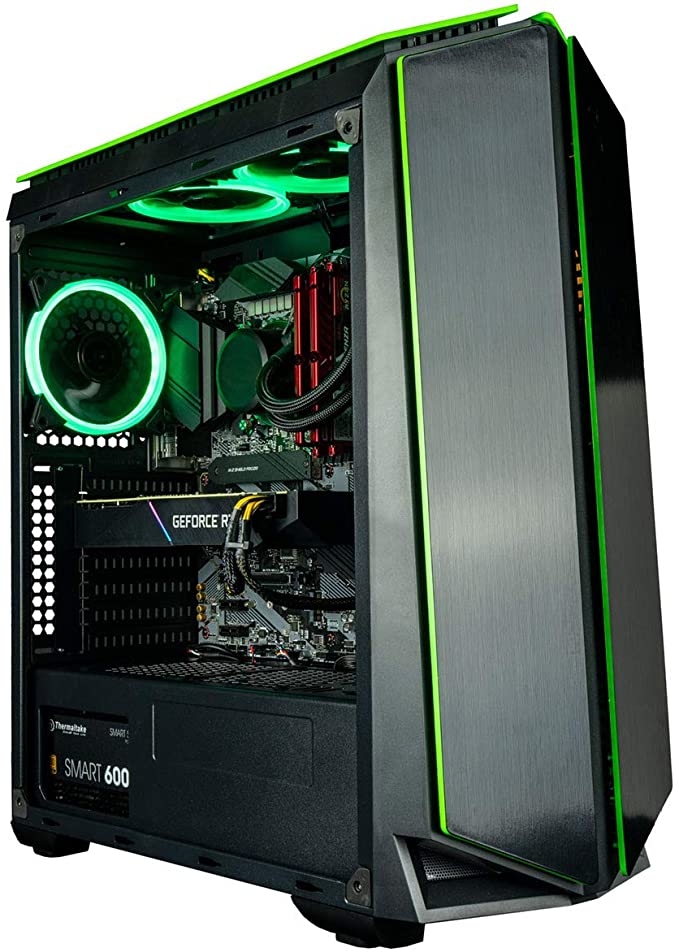
    The CUK Mantis gamer pc comes with an Intel Core i9-12900KF, 64GB of DDR4 RAM, 1TB SSD, secondary 2TB HDD, and Gold-Rated 850-watt power supply. The PC is also equipped with six green LED Fans, an AIO cooler, and tempered glass PC Case. You’ll find similar budget cases that have tempered glass and other features.

    When we’re talking about setting up dream units, this is probably it. The CUK Mantis can deliver 4K gaming for prolonged periods of time. If you’re a content creator and want to show off games at the best graphics setting and running at the highest frame rates possible, then the CUK Mantis should be on your shopping list.

    What’s The Price Tag?

    CUK Mantis is priced under $4,700, making it the most expensive prebuilt gaming pc in the market.

    Empowered PC Sentinel – Another Powerful RTX 3090 Beast

    The Empowered PC Sentinel is one of the best prebuilt gaming PCs out there in the market right now. It comes with a 12th generation Intel Core i9-12900KF processor running at clock speeds of 3.20GHz and up to 5.20GHz.

    It doesn’t shy away from packing 64GB of RAM at 3200MHz frequency. Storage-wise, it comes with your typical 1TB NVMe m.2 SSD along with a secondary 2TB HDD. This powerful combination of CPU and other components assures its users the best performance possible for games and other multi-threaded tasks. Oh, did we mention that the Empowered PC Sentinel is also liquid cooled?

    What’s The Price Tag?

    Empowered PC Sentinel guarantees quality and delivers nothing but the best performance possible. The price tag for this beast comes in at a whopping $4,299, but it’s currently discounted to $3,999.

    CUK Continuum Micro– Small Form-Factor RTX 3090 Prebuilt PC

    Another prebuilt PC from CUK (Computer Upgrade King) is the Continuum Micro Gamer PC. Basically, this has the same specs inside a CUK Mantis, but it comes in a micro-ATX case. If you want a small-form factor PC but still powerful enough to run Elden Ring at high frame rates, this is the PC.

    The CUK Continuum Micro gamer pc comes with an Intel Core i9-11900KF processor, 64GB DDR4 RAM, 1TB NVMe SSD, 2TB HDD, 850-watt power supply, and AIO liquid cooler.

    If you just want power without taking up a lot of table space, the CUK Continuum Micro is the best option for you.

    What’s The Price Tag?

    The CUK Continuum Micro will cost you $3,999 for the 64GB DDR4 RAM / 1TB NVMe SSD variant, while the 128GB / 2TB NVMe SSD will cost you $4,499.

    iBUYPOWER Pro TraceMR 224i – Best Value RTX 3090 Gaming PC

    iBuypower is a brand that needs no introduction, simply because it’s known for its affordable gaming lineup. However, they are venturing into the high-end gaming space when they made a gaming monster called the iBuypower Pro TraceMR224i, and boy, does it pack some power under the hood.

    The iBuypower Pro TraceMR 224i comes with an Intel Core i9-11900KF processor, 32GB of RAM clocking at 3200MHZ, and 1TB SSD. It also comes with 240mm Liquid Cooling.

    What’s The Price Tag?

    The iBuypower Pro TraceMR224i costs $3,799 for both the Intel Core i9-11900KF variant and Intel Core i9-12900KF variant.

    MSI Aegis RS 10TH-061US – A Gaming PC With Massive Storage

    The MSI Aegis RS 10TH-061US is every content creator’s dream PC setup. Not only does it come with the powerful RTX 3090, it also comes with a storage capacity of 3TB (1TB NVMe SSD and 2TB HDD secondary storage).

    The MSI Aegis RS 10TH-061US comes with the Intel Core i7-10700K processor, running at 8 cores and 16 threads. Gaming is a breeze with this kind of CPU because it clocks in at 3.8GHz at the base speed and can be overclocked to 5.1GHz.

    The MSI Aegis RS 10TH-061US comes with 16GB Dual-Channel RAM (2 pieces of 8GB sticks) clocking in at 3000MHz frequency.

    What’s The Price Tag?

    With massive storage comes massive price tag. In this case, the MSI Aegis RS 10TH-061US has a reasonable price tag of $4,666.

    CUK Mantis Ryzen – Best RTX 3090 Workstation Desktop

    If you want to upgrade your workstation, or purchase a workstation-grade system, the CUK Mantis Ryzen should be on your radar.

    The Mantis Ryzen comes with an AMD Ryzen 9 5950X Processor, 64GB RAM, 1TB SSD, and 4TB HDD. By swapping the Intel Core i9 with the AMD Ryzen 9 5950X, this Mantis is better equipped for multi-threaded tasks.

    With more memory and extra storage, this makes it the best choice for heavy gaming, serious graphics design, video editing, game design, and other CPU-intensive tasks.

    What’s The Price Tag?

    The CUK Mantis Ryzen costs $3,899 for 64GB DDR4 RAM / 1TB SSD variant.

    OMEN GT13-0090M 30L – Best Bang For Your Buck

    Even if it’s a few hundred bucks cheaper than the PC’s listed above, the OMEN GT13-0090M 30L gaming PC should never be underestimated.

    First off, the OMEN GT13-0090M 30L comes with a 10th Gen Intel Core i9-10850K processor, 32GB (3200Mhz) DDR4 RAM, and 1TB SSD. It also comes with Thermal Cooler Master 120mm Liquid Cooler running at 4500RPM Fan Speed, allowing you to run heavy games at max settings for prolonged periods.

    It definitely packs a punch and confidently competes with the other RTX 3090 PCs in the market.

    What’s The Price Tag?

    The OMEN GT13-0090M 30L costs $3,499 for the RTX 3090 variant. Other variants come with the Intel Core i9-10900 Processor, but is only powered by the RTX 3080.

    Skytech Prism II – Cheapest RTX 3090 Prebuilt Desktop

    The Skytech Prism II is the cheapest RTX 3090 PC you can get your hands on right now, but it doesn’t mean that it’s lacking in power or specs.

    A Skytech Prism II is equipped with an AMD Ryzen 9 5800X Processor, 32GB of RAM, and 1TB SSD. It has everything you need to run AAA games at high frame rates. This powerful gaming PC makes it possible for you to game at 4K Resolution, thanks to the combined power of the AMD Ryzen and RTX 3090.

    What’s The Price Tag?

    Skytech Prism II comes in with a $3,999 price tag. Unlike the CUK product line, there’s only one variant in the market.

    CUK MPG Velox by MSI – Another Affordable RTX 3090 PC

    Speaking of affordable RTX 3090 prebuilt gaming PCs, we’re here to introduce the CUK MPG Velox by MSI.

    This gaming PC comes with an Intel Core i7-12700F processor (12 cores and 20 threads), which is still powerful when combined with the RTX 3090. Rather than being liquid cooled, the CUK MPG Velox by MSI uses traditional inbuilt fans, which isn’t as convenient but you end up with a more cost-effective unit. If you want to know more about the different PC case sizes, we have an article for that.

    It also comes with 32GB DDR4 RAM, so you’re guaranteed lag-free gaming. The CUK MPG Velox by MSI comes with 512GB SSD and 2TB HDD secondary storage. Granted, it’s not as large as the 1TB variants from other brands, but you can still store games with large file sizes without worry.

    What’s The Price Tag?

    The CUK MPG Velox by MSI costs $3,399 for the 3090 variant, which isn’t a complete surprise. The specs inside the CUK MPG Velox by MSI may be lackluster compared to the other gaming rigs in this article, but it’s still powerful. If you want to guarantee good gaming performance without having to shell out a lot of money, the CUK MPG Velox by MSI might be the best option for you.

    CUK ROG Strix GA15DK – Powered By AMD Ryzen 9

    For fanboys of AMD Ryzen, the CUK ROG Strix GA15DK is the one to look out for. This beast of a RTX 3090 gaming guarantees high performance all thanks to its powerful components.

    The CUK ROG Strix GA15DK is equipped with the AMD Ryzen 9 5900X, running at 12 cores and 24 threads with a base clock speed of 3.7GHz. This can be overclocked to a maximum of 4.8GHz. You also don’t need to worry about bottlenecking because it’s supported by 64GB of Dual-Channel RAM (2 pieces of 32GB RAM), clocking at 2933MHz.

    For storage, you can rest easy as the CUK ROG Strix GA15DK comes with 1TB NVMe SSD storage and 3TB 7200rpm HDD secondary storage.

    What’s The Price Tag?

    The CUK ROG Strix GA15DK 3090 Variant will cost you $4,799. The CUK ROG Strix GA15DK also comes with RTX 3070 variants and RTX 3080 variants.

    The Big Debate: Should People Go For An RTX 3090 Prebuilt Gaming PC vs Build Their Own Gaming PC?

    If you’re concerned about your budget, the best decision is to always build your own gaming PC. One can even argue that you could get more bang for your buck for building your own PC because you can get better hardware than what’s inside a prebuilt gaming PC for less cash.

    But when and why should you go for a prebuilt PC as opposed to building your own? Let’s take a look at two factors.

    Convenience

    The main selling point of a prebuilt PC is convenience. It saves people the hassle of building a PC from scratch. For people who aren’t tech-savvy enough or for those who don’t have time to learn how to build a PC, a prebuilt PC makes more sense to purchase. You won’t have to go through the trouble of picking out which case to buy (or what sizes to pick, for that matter), the graphics card to purchase, and so on.

    A prebuilt PC saves you the time of finding compatible components and takes out a lot of the guesswork involved in building your own PC. You also won’t need to worry about warranty because you just send the entire PC to the manufacturer.

    If you want to upgrade your prebuilt PC, you can get in touch with the suppliers or manufacturers. They can do this for you at little to no cost at all.

    Make no mistake though. Prebuilt PC’s from the best manufacturers in the world aren’t just nice to look at. These are units that are meant to withstand intense gaming demands. These units undergo stress testing to ensure that all components work as intended before they are shipped to you.

    Your prebuilt PC will also come with a registered Windows with pre-installed drivers. All you have to do is download your games once you receive your unit.

    Performance

    Performance of 3090 gaming PCs is great, and there’s no doubt about it. But in theory, you could also get better performance than a prebuilt PC when you build your own. You can get lower prices for more powerful hardware than what’s inside a prebuilt PC. Blame it on the individual parts’ markup inside a prebuilt computer.

    This means you guarantee yourself better in-game performance and longer future-proofing for less money spent.

    Prebuilt PC Buying Guide: How Do You Choose The Best RTX 3090 Gaming PC?

    When it comes to gaming, you’re not relying on the GPU’s power alone. Other components also come into play that affect gaming performance, and they can literally make or break your gaming rig.

    When you’re out shopping for a prebuilt gaming PC, it pays to keep an eye out for the following components that should help you get the best RTX 3090 gaming PC possible while reducing instances of GPU bottlenecking and hardware compromise.

    Processor

    An important component that you shouldn’t ever compromise is your processor. An underperforming processor combined with an RTX 3090 can lead to low performance in general.

    You want to purchase a processor that comes with multi-core design, a decent clock speed, and as power-efficient as possible. You’re looking at least 8 cores and 16 threads, clocking in at a minimum of 3.0GHz.

    Both latest generation processors from Intel and AMD are capable of synergizing well with the RTX 3090, so it’s just a matter of personal preference. If you ask me, an AMD Ryzen 9 5900 is a great choice if you want a processor for multi-threaded productivity tasks. Or if you are an Intel nut, the Intel Core i9 is capable of matching the RTX 3090’s performance.

    RAM

    RAM provides both capacity and speed for your gaming PC, and it decides on whether or not you can open heavy games and software simultaneously.

    Talking about the RAM capacity, a high-end gaming PC equipped with an RTX 3090 should come with at least 16GB of RAM. This is the bare minimum for any heavy gaming PC. But if we’re talking about productivity, you can’t go wrong with going for 32GB.

    From the tech side of things, you should be on the lookout for the speed or frequency of the RAM. The faster the RAM, the faster it performs and the better it multitasks.

    You should go for DDR4 RAM clocking in at 2933MHz at the bare minimum. Going lower than that could cause bottlenecking.

    Storage

    Heavy games come with large file sizes, so you need a sizable storage solution to accommodate your growing library of games. For a high-end PC powered by an RTX 3090, you should have at least 1TB of SSD (solid state drive) storage. Combined with RAM, your games load faster when stored on an SSD compared to an HDD storage.

    Gamers also have a backup HDD storage ranging from 1TB to 3TB where they store their game data, video recordings, and more. Though, if you can shell out more money for SSD’s with higher storage capacity, then go for it.

    Normal Cooling or Liquid Cooling

    Going for normal cooling or water cooling depends on what kind of processor you have. Prebuilt gaming PC’s with water cooling solutions come with water-cooled CPUs. If your processor is an Intel i9 or Ryzen 9, a water-cooled CPU might be necessary. But if you’re just going for an i7 or Ryzen 3000 series, normal cooling will suffice.

    Aesthetics

    A prebuilt gaming PC worth thousands of dollars should also look just as good on the outside as it does on the inside. Aesthetics don’t really affect gaming performance at all, so it boils down to personal choice and preference. Do you want something minimalist in design, or do you want your rig to don the RGB lights?

    Now we got that out of the way, it’s time we looked at the best RTX 3090 gaming PC available in the market.

    How Much Would It Take To Build Your Own Gaming PC with RTX 3090?

    As of this writing, people are not able to get their hands on an RTX 3090 due to limited stocks. However, if you were one of the lucky few who did manage to get their hands on it, then building your own gaming system is the way to go.

    The same thing can be said for the RTX 3060, RTX 3070, and RTX 3080 graphics cards. If you can’t afford the RTX 3090 gaming setup, most of the prebuilt gaming PCs we have on this list will come with the RTX 3060/RTX 3070/RTX 3080 variants.

    We can assume that the price of an RTX 3090 card is about $2,000 to $2,500. Then you can have this list:

    1. An Intel Core i9-12700k processor costs about $349.
    2. Corsair Vengeance 32GB DDR4 RAM costs about $142
    3. Western Digital 1TB NVMe SSD is about $79, depending on brand
    4. Corsair RMX Series 850-Watt Power Supply is about $114
    5. NZXT Kraken 240mm AIO Liquid Cooler is about $120
    6. Corsair 4000D Tempered Glass Mid-Tower ATX Case is about $90

    All in all, you’re looking at about $3,300 to $3,500 to build an RTX 3090 gaming PC. If you want more power and more storage, you can go for higher capacity RAM and SSD, and you’d still spend less than buying a prebuilt gaming pc.

    The Bottom Line

    There you have it, a list of the best prebuilt gaming PCs in the market that comes with the Nvidia RTX 3090 GPU. The list here encompasses different budgets with different requirements, but all in all, you really can’t go wrong with choosing any one of these computers.

    These PCs are guaranteed to give you the best performance for the best value, and more. Whether you’re all about that 4K resolution gaming with Elden Ring, or running Minecraft with Ray-Tracing on, these PCs are beasts in their own right.

    Of course, it goes without saying that if you have access to stocks of RTX 3090, you are probably better off with building your own system. You’ll end up spending less than what you’re going to pay for a prebuilt gaming PC, and you’re able to get better CPU and other components without spending extra money.

    Our personal favorite here would probably be the Skytech Prism II if we’re talking about budget. It’s one of the cheapest prebuilt gaming computers in the market right now. Generating power from the AMD Ryzen processor, 4k Gaming is made easy with this beast of a unit.

    But if we really have to stretch out our budget, we’re probably going with the CUK Mantis. Not only does it get you the best bang for your buck, but you’re also investing in longer future-proofing for your system. You’re good to go for the next few years without having to upgrade any of its components.

  • 6 Best Capture Cards For Streaming As Of Aug 2026 – Upgrade Your Twitch Game!

    6 Best Capture Cards For Streaming As Of Aug 2026 – Upgrade Your Twitch Game!

    If you’re an aspiring streamer looking to create gaming console content, or you just want to share your amazing gameplay when you play games, then you need a capture card. There are capture cards meant for PC gaming, while there are capture cards meant for consoles. Apart from helping you stream footage, you can use some capture cards to build your overall stream overlay. You can link your stream capture software, audio mixer software (if you have any), high-end webcam or DSLR, and a stream deck to a capture card to stream or capture HDR footage without compromising video quality.

    The best gaming capture cards in the market today have impressive features. The high end cards allow for recording gameplay at 4K/60Hz and HD recording. Now, to take advantage of a capture card’s power, your streaming computer needs to be just as powerful. The newest Nvidia and AMD graphics cards can get you all the power you need to capture epic gaming moments at the highest resolution and frame rate possible.

    What’s a Capture Card?

    But first, what is a capture card? A capture card is a piece of hardware used together with a third party software to capture on-screen content and encode it for playback through livestream or high-quality recording.

    Capture cards are compatible with PC and consoles as long as they have an HDMI cable. You can also find portable capture cards that you can bring along when you travel. PC gamers and console gamers both enjoy the use of a capture card for streaming or for capturing gameplay.

    How Do You Use a Capture Card?

    How do you capture gameplay footage using a capture card? Well, you need to know what systems are compatible with a capture card first.

    Most capture cards are compatible with the following devices:

    1. Current generation consoles: Nintendo Switch (or Switch OLED), Playstation 5, Xbox One
    2. Personal Computers
    3. Macbooks (check for capture cards’ hardware requirements first)
    4. DSLR Cameras, or any digital camera, with HDMI output

    To use a capture card, you need the following:

    1. HDMI output with HDMI cable
    2. TV or monitor
    3. Personal computer (gaming hardware recommended) for storing or recording footage
    4. Capture software (i.e. Streamlabs OBS, Bandicam, etc.)

    Top 3 Best Capture Cards For Streaming

    Now that we know what a capture card is and how you can use it to record gameplay, it’s time to reveal the top 3 capture cards for streaming and recording gameplay footage.

    Best External Capture Card: Elgato HD60 X

    Elgato HD60 X Best Capture Cards for Streaming

    A brand that needs no introduction. Elgato is one of the leading manufacturers for all recording and streaming hardware. From microphones to stream decks to capture cards, it comes as no surprise that Elgato is on this list.

    The best capture card in the market right now is the Elgato HD60 X. What’s really impressive about this capture card is the 4K passthrough and makes use of G-Sync or FreeSync technologies. The latter was made possible with the latest updates on the Elgato HD60 X.

    This capture card will cost you about $200, and comes with three key capture resolutions:

    • 4k at 30FPS
    • 1440p at 60FPS
    • 1080p at 60FPS

    Resolution and frame rate capabilities in a capture card such as Elgato HD60 X is just remarkable and makes it the best value capture card for streaming or recording. To help you save bandwidth, the encoding is set at 4:2:0 by default. You can set it to 4:2:2 via non-default codecs and will work at 1080p/60FPS or 1440p/30FPS recording, but don’t expect that feature out of the box.

    You get 4:4:4 passthrough functionality, or in this case, you get uncompressed recording. This kind of capture device allows you to record high quality videos without losing a lot of that information.

    All in all, this is an external capture card that’s worth investing on if you’re a serious video game content creator or streamer. I use the Elgato Game Capture HD60 S myself and my console captures have never been as crisp and clear. If you’re due for an upgrade, get the HD60 S or the HD 60 X when budget permits.

    Best Budget Capture Card (External) – EVGA XR1 Lite

    EVGA XR1 Lite Best Capture Cards for Streaming

    Those looking for a capture card but on a tight budget should go for the EVGA XR1 Lite. Do not underestimate this beast just because it’s affordable.

    The EVGA XR1 Lite provides you with 4K/60FPS pass-through, which makes it perfect for the next-gen consoles (PS5 or Xbox One). You can record gameplay at 1080p/60FPS without lag or compression as well. This capture device is also simple to use. All you need is HDMI ports and cables to connect to PC or console and a USB Type C cable. You can also connect it to a DSLR camera for the best quality webcam footage.

    The EVGA XR1 Lite is housed in a sleek yet durable plastic chassis. You also get lighting indicators that lets you know if the card is idle, active, updating, or not working. It’s also certified to use with OBS software, and makes it one of the best plug-and-play capture cards in the market right now. If you have a gaming PC with decent specs, then the EVGA XR1 might be a solid pick amongst the other cards.

    Best High-End Capture Card – Elgato Game Capture 4K60 S+

    Elgato Game Capture 4K60 S+ Best Capture Cards for Streaming

    Second to the HD60, the Elgato Game Capture 4K60 S+ makes it to the top three best capture cards for streaming for a number of reasons. This is also a personal review of sorts given that this is the capture card that I am currently using right now.

    While most capture cards need to be linked to a gaming PC or console to record in-game footage, you only need an SD card for the Elgato Game Capture 4K60 S+ so you can record footage and store it on the card itself. Plug the capture card in, press Record, and you’re all set! All you really need to do from there is to keep on purchasing another SD card when the previous one is filled.

    This is one of the few capture cards in the market right now with their own separate storage to capture game footage. It’s also versatile because you’re recording gameplay footage at 4K/60FPS and in HDR at the same time. Truly one of the best capture cards in the market, and if you can’t get the HD60 X, the Elgato Game Capture 4K60 S+ is a decent second choice.

    Honorable Mentions For Best Capture Cards For Streaming

    The next list will contain what we think are honorable mentions for the best capture cards in the market right now. Most of them are external capture cards, but there are a couple on here that are internal capture cards.

    The list below is not arranged in a particular order, so feel free to check out which one is the best capture card for you.

    Genki Shadowcast (Wireless)

    GENKI ShadowCast Best Capture Cards for Streaming

    If you want to run a streaming software that doesn’t have you installing an external or internal capture card, you might want to consider an wireless capture card. And the best capture card in that category is the Genki Shadowcast.

    The Genki Shadowcast plugs in directly to your streaming video source via an HDMI cable without requiring an extra HDMI cable. You can simply plug it into a free HDMI slot on your consoles (Playstation 5 or Xbox series) or PC to receive the video feed.

    Once the Genki Shadowcast is tied to a source device, you connect to it using a single USB-C cable on your laptop or PC that you’ll use as the capturing device. For those with minimal desk space or those who want to run a compact setup for recording gameplay, or streaming gameplay, then you’ll want to consider the Genki Shadowcast.

    For about $50, this makes the Genki Shadowcast the most affordable capture card for streaming without compromising video quality.

    Asus TUF CU4K30 (External USB-C)

    Asus TUF CU4K30 Best Capture Cards for Streaming

    The Asus TUF CU4K30 is the best capture card for those who don’t have an available PCIe slot or USB-A port but have a USB-C port instead. In simpler terms, if you’re using a third party software for streaming on a thin gaming laptop, chances are you won’t have those two mentioned slots/ports.

    But the Asus TUF CU4K30 comes to the rescue for that one PC gamer who just games on a thin laptop. The Asus TUF CU4K30 supports a 4K/30FPS recording, or you can drop it to 2K resolution at 60FPS, or even better at 1080p/120FPS streaming/capture. The card can also pass video signals from your game system or gaming hardware through your TV or monitor at 4K/60Hz with HDR or 2K at 144Hz or 1080p at 240Hz. The Asus TUF CU4K30 comes in a sleek aluminum chassis with RGB lighting that serves as status indicators.

    AVerMedia Live Gamer Duo (Internal)

    AVerMedia Live Gamer Duo Best Capture Cards for Streaming

    Avermedia’s Live Gamer Duo is probably one of the best internal capture cards out here. As the name implies, you can juggle two video capture tasks simultaneously. Avermedia Live Gamer Duo is equipped with two HDMI inputs (ports) which will let you handle both consoles (Playstation, Nintendo Switch, or Xbox Series) or gaming PC capture and hooking up an HDMI video feed using a DSLR or digital camera.

    Not only is your desktop PC recording and streaming at 1080p/60FPS, but you’re also showing on-screen appearance at the same video quality.

    This internal card captures 1080p/60FPS video game content using its own software, while handling two different video input sources. You’re streaming and recording (lag free pass through) at 4k at 60Hz with Full HD, 1080p at 240Hz, or 1440p at 144Hz video quality. This is the best capture card if you’re serious about creating video game content.

    AVerMedia Live Gamer 4K (Internal)

    AVerMedia Live Gamer 4K Best Capture Cards for Streaming

    AVerMedia Live Gamer 4K is the cheapest internal capture card in the market right now that allows for capturing gameplay at 4K/60FPS footage in HD resolution. Unfortunately, you can’t broadcast at that quality, even with third party software. If that’s not a big letdown for you, the AVerMedia Live Gamer 4K has more to offer.

    AVerMedia Live Gamer 4K lets you record footage at 1080p at 240FPS, which is huge! If you’re the type of PC gamer who likes RGB lighting, then you might enjoy the RGB lighting from the AVerMedia Live Gamer 4K, as it can add more flair to inside your PC.

    Elgato Game Capture HD60 Pro (Internal)

    Elgato Game Capture HD60 Pro Best Capture Cards for Streaming

    4K videos take up a lot of bandwidth when you upload them, and uploading them to your YouTube channel might reduce the quality a bit but not as what you’d anticipate. Your viewers will still have to sit through a few more seconds of buffering longer than what they’re accustomed to.

    If you want to dump your external capture card for an internal one, look no further. The Elgato Game Capture HD60 Pro should be on your radar. This is also probably the only budget capture card from Elgato, so that’s another bonus for bagging the Elgato Game Capture HD60 Pro.

    This internal capture card captures game footage at 60FPS and Full HD. It’ll take up half the PCIe slots that its 4K counterpart consumes and costs you $100 less too. Apart from broadcasting in full HD, you can also record and store footage to your hard drive at 1080p at 60FPS in H.264 codec at a max of 60Mbps bitrate. This internal card also provides you complete support for streaming on your YouTube channel and Twitch.

    With the help of Game Capture HD, OBS Studio, or XSplit, broadcasting at 1080p is flawless even for something as budget-friendly as this capture card.

    Elgato Game Capture 4K60 Pro Mk. 2 (Internal)

    Elgato Game Capture HD60 Pro Best Capture Cards for Streaming

    Probably one of the priciest capture cards on this list, the Elgato Game Capture 4K60 Pro Mk. 2 is a PCIe internal capture card that allows you to capture 4K resolution footage at a max of 140Mbps bitrate without sweating. This kind of video capture power shouldn’t even be made possible, but here we are with the Elgato Game Capture 4K60 Pro Mk. 2.

    The Elgato Game Capture 4K60 Pro Mk. 2 comes with Multi App Access, which lets you network multiple streaming and recording apps to access your capture card simultaneously. You’re able to stream, broadcast, and record gameplay footage at 4K HDR at standard dynamic range.

    AVerMedia Live Gamer Bolt (External)

    AVerMedia Live Gamer Bolt Best Capture Cards for Streaming

    If you’re a PC gamer looking for the best capture card for streaming, but can’t afford the Elgato brand, the AVerMedia Live Gamer Bolt is your next best option. Out of all the capture cards we’ve seen and tested, the AVerMedia Live Gamer Bolt delivers the lowest latency of added latency. This makes it the perfect partner for recording games that require fast reflexes.

    The AVerMedia Live Gamer Bolt delivers 4K/60FPS HD Recording or 1080p/240FPS resolution. The only downside here is that you need a Thunderbolt 3 Port, which you can only find in certain motherboards or gaming laptops.

    Frequently Asked Questions About Capture Cards

    Why Do You Need a Capture Card If You Can Record Using Third Party Software?

    OBS and other third-party broadcasting software are great and all, but they have certain limitations. These limitations include the capture quality from your gaming PC or console.

    For example, let’s say you have an Xbox series console and you want to run an HDMI camera instead of your typical USB web camera. The easiest way for you to get both of these to work on your PC is to hook them up to a capture card.

    OBS and other third-party software are reliant on your system’s resources. Your CPU and GPU will affect capture quality greatly, so you can imagine the strain it will put on low-end hardware. Modern CPUs have gotten quite better at handling multitasking for recording and streaming, but a capture card reduces a lot of that load on your system.

    If you have a console and a gaming PC, a capture card allows you to record gameplay footage or broadcast gameplay from your console using the stream outlay that you use for PC game footage.

    Will Capture Cards Reduce Video Quality and Flashback Recording Quality?

    A good dedicated capture card allows you to increase the quality of your stream or video game recording. As mentioned above, the card reduces CPU and GPU strain from recording and streaming.

    Simply put, you can run on a midrange gaming PC while capturing high resolution and framerate footages from consoles or PC using a capture card.

    This is made possible with something called Chroma Subsampling. This reduces bandwidth requirements, which affect the quality of the final output. Bear in mind that when you upload your content to sites such as YouTube, then the quality might drop even further. But you reduce the quality drop greatly when you use a capture card.

    Do I Need To Use A Built In Audio Mixer To Record Audio?

    You don’t need a separate or built in audio mixer to capture in-game audio. Your capture card will be recording or broadcasting audio as crisp as it records or broadcasts videos.

    With the help of OBS, or any streaming software for that matter, you can use the software’s built in audio mixer to help you generate the best audio quality for recording and broadcasting.

    Of course, you can’t edit your audio when you’re broadcasting but you can always enhance audio for your recordings during post-production.

    Will Price Matter?

    Elgato and AVermedia brands are two of the most expensive brands for capture cards in the market right now, but it doesn’t mean they’re making it less accessible to the public. They have budget-friendly options for gamers who’re getting into streaming or recording but don’t want to invest a lot of money just yet.

    Granted, you can’t expect the same kind of features for their budget-friendly counterparts that you’ll find on the ones that are on this list. As for the other brands, you’ll probably be able to find capture cards that have the same specs as the ones on this list but at a lesser price tag.

    To put it simply, you’re getting what you’re paying for.

    What’s Our Verdict?

    Regardless of your streaming setup, here’s our own verdict for the best capture card (both internal and external):

    External Capture Card: Elgato HD60 X

    There’s no question here that the best external capture card is the HD60 X. It’s got everything you need to record and broadcast gameplay footage, regardless of the capture device. Imagine recording video game content from a game console that matches the video quality of a high-end gaming PC.

    Streaming software is negligible at this point because you can make use of Elgato’s own app to help you improve video input quality and audio quality. But if you can’t afford the Elgato HD60 X, the HD 60 S+ is the second best option for you if you want external capture card.

    Internal Capture Card: Avermedia Live Gamer Duo

    We’re torn between the Avermedia Live Gamer Duo and Elgato Game Capture 4K60 Pro Mk. 2 for this category, simply because you can’t go wrong with choosing either.

    Internal capture cards are meant for people who don’t want to deal with hardware that occupies desk space beside their desktop computer. Unfortunately, current generation game console such as an Xbox series or Playstation 5 can’t install an internal capture card so they’ll have to make do with a wireless card or an external capture card.

  • 8 Ridiculously Awesome Wall-Mounted PC Build Examples (Aug 2026)

    8 Ridiculously Awesome Wall-Mounted PC Build Examples (Aug 2026)

    While the growing popularity of desktop PCs and PC gaming has seen a rise in creative and striking computer setups, featuring more RGB than you can shake a mechanical keyboard at, there are some who have pushed the boundaries of computer building even further.

    If you’re someone who never seems to have enough desk space or who is struggling with temperature management, there’s one trend in PC building that has taken off and may be something worth looking into.

    This trend is the wall-mounted PC, and it’s as impressive to look at as it is crazy sounding. Think of it as taking high-end prebuilt gaming PCs to the next level.

    While many people still love the standard mid-tower desktop, and there are plenty of great options available if this traditional setup appeals to you, there’s something truly amazing about a wall-mounted PC, whether it be the exposed components whizzing overhead or the sheer practicality of freeing up all that extra space – it’s no wonder these setups have exploded in recent years.

    The growth in popularity of this slightly strange but highly appealing system has seen a number of incredibly badass looking computers be put together, and as they become ever more elaborate we move one step closer to that glorious cyberpunk future that awaits us!

    In this post we’re going to look at 8 of the most zany and impressive wall-mounted PC builds from all over the world, to give you a little bit of inspiration and to encourage you to consider if you really need that new PC case after all!

    Image Source

    This build was posted on the overclock.net forums way back in 2014, by user Recoil P, and it’s probably one of the earliest trackable wall-mounted PC builds making this a very early iteration of the new very popular, and incredibly refined philosophy of wall-mounted computers.

    The build consisted of an Intel Core i7-920 and a GTX 590 paired with a custom water cooling system made from a variety of specialist custom parts from Aquacomputer, Monsoon, Phobya, and Alphacool, and a few others.

    While the component list shows the age of this system, at the time it would’ve been a beast, and despite its relatively simple design compared to today’s standards, it’s clear to see how much desk space this has saved.

    There are some interesting design choices too, such as the reverse mounted graphics card and minimal blue lighting.

    If you’re interested in looking at the build log, you can check it out here!

    Image Source

    Another great early build is this one by Show4Pro, as posted on overclock.net here

    As you’ll see in the post, this one was put together over the course of a month and took around 100 hours to build indicating how much effort and care goes into these designs. Much of the work would need to be done by hand and custom rigged, so if you thought building a PC was nerve-wracking enough, imagine bolting it all to your wall as you do it!

    The build itself consisted of an Intel Core i7 950, an ASUS Rampage III Extreme,  12GB of Corsair Dominator RAM, 4 x 120GB Corsair Force SSDs, 2 1TB Western Digital HDDs, another 2TB Western Digital Caviar Green HDD and a further 1.5TB  Caviar Green HDD with a Corsair AX1200i as well as cooling components from EK Supreme, Swiftech, FrozenQ, XSPC and Koolance among an array of others.


    It’s a seriously impressive build for a very early run at this style of PC, and while the specs may be well and truly outdated today (and were probably quite a pain to swap out) this PC would’ve been a true spectacle at the time and is a historic piece in the world of wall-mounted PCs.

    Image Source

    This build, put together by Chris Howell was highlighted on Bit-Tech.net in 2015 and it’s one of the most visually consistent and striking builds on the list, that looks like it comes straight from the Metro franchise or maybe even the Bioshock Universe!

    The steampunk aesthetic is awesome and is well connected by copper-colored accents on the fans and power supply, as well as the HDD. The copper cable routing is also a genius touch to hide the cables, and the custom wooden backboards look great too, if they may be a little difficult to keep clean.

    You can check out the build itself here.

    Image Source

    The next build was put together by an Imgur user known as FerosRigs, and as you can see this is a very nice system with a batman-esque pairing of purple and green lighting that looks as if this PC is Bane’s own personal gaming rig!

    This builder has put together an array of different rigs and as their name suggests they’re clearly an avid builder keen on experimenting with systems and pushing them to be as artistically appealing as they are powerful.

    There are several nice touches here such as the metrics display to monitor temps and speeds, as well as invisible cabling and very cool lighting around the power supply fan and around the rear of the backboard for a nice surround effect.

    You can check out some of the builds here.

    Image Source

    This rig by Reddit user u/vicoooo is a very nice minimalist system that shows you don’t have to go crazy with the cable management or the lighting to get a very sleek and clean-looking system that would suit almost any room or aesthetic.


    The lack of a theme is actually a boon and the simple, clean layout speaks more to the practical user who wants to get the benefits of the space and cooling wall mounting can provide without agonizing over thematic details and elaborate lighting and cable management.

    You can find the build log here.

    Image Source

    Back to the heavily themed builds, this rig goes to show how glorious it can be to honor your favorite franchise or show with a stunning wall mounted PC.

    This rig was put together by Imgur user marksmanguy and shows how well yellow and blue work together, and how to incorporate a lot of personality into your wall-mounted PC.

    This PC truly floats like a butterfly and stings like a bee! 

    The build log can be found here!

    Image Source

    This build by Imgur user JalfreziJeff is an interesting carbon fiber style system that makes heavy use of this effect along with plexiglass and RGB lighting and gives a feel of a Formula 1 racing car engine more than a high performance gaming machine!

    You can find the build here!

    Image Source

    This build by Imgur user kdevault813 is a much more modern PC and has some awesome touches such as the power gauge on the right and old-fashioned switches coupled with a rustic wooden backboard.

    The build is no slouch despite its old-fashioned aesthetic and the whole build can be found here!

    https://www.youtube.com/watch?v=gGYMwpwOQns

  • 3 Great Mini-ITX Builds – The Best Mini Gaming PCs (Aug 2026)

    3 Great Mini-ITX Builds – The Best Mini Gaming PCs (Aug 2026)

    PC building enthusiasts used to go for big computer cases, on the principle that the more room they had, the more high-end gaming tech they could fit into it.

    These days though, the fashion in building is to go smaller and use mini-ITX motherboards. Result? Powerful mini-gaming PCs, less of a footprint.

    The rise in popularity of mini-ITX cases, and the unstoppable advance of computer hardware (GPUs and CPUs) means it’s never been as easy to build a powerful mini gaming computer as it is right now.

    If you’re thinking of downsizing, we’ve put together three options for small form-factor mini gaming PCs: a budget version, a mid-range, and a high-end option.

    That way, you can build your own mini budget gaming PC, according to your gaming needs, your budget and your sense of personal style, without worrying about what goes with what.

    Think of these as the closest thing to buying a pre-built machine, but optimized for performance and price.

    We’re giving you a bridge into the world of mini-builds for gaming PCs, so even if you haven’t been sure till now which components you’d need to get what results – and what you’d probably have to pay for them – you can follow our lead, or vary it slightly to suit your own individual tastes, and put your own stamp on your build.

    In Brief – Three Mini-ITX Builds

    Let’s take a quick look at the three mini-ITX gaming builds we’ve put together. The table will give you some basic idea of what the build contains, as well as Amazon links to the components you’ll need to build them. We’ve also added in the link to the pre-built version.

    [affiliatable id=’115896′]

    A Budget-Friendly Mini Gaming PC

    This budget gaming build features a compact mini-ITX cube-style case. It’s the Cooler Master Elite 130, which is one of the most budget-friendly cases on the market. But because of a rush of powerful mini graphics cards, you can fit a pretty high-end system in this much smaller case if you want to.

    Here though, we went cost-conscious with an Intel Core i3-10100f and a GTX 1650 Super.

    The i3-10100f is quad-core, and the GTX 1650 Super 6GB graphics card will let you play most games you could want on a reasonably pocket-friendly 1080P monitor. And if your favorite games don’t demand high-intensity graphical performance (Hello, Fortnite…), this is a build that will play them on all the higher settings.

    We chose the Intel Core processor because while a budget AMD processor like the Ryzen 3 3200g would at least work, the Intel would outperform it in this scenario.

    In terms of the other specs, this build has 8GB of DDR4 memory, 550W of power and an SSD of 240GB. If you feel like amping up the storage, you could switch out the SSD for a 1TB hard drive for around the same price, but the SSD felt right in a smaller build.

    This is a solid mini gaming PC that delivers for any games that are not graphically thirsty, and should run anything you feel like on a 1080P monitor, at least on lot-to-medium settings.

    How To Build It – The Parts You’ll Need

    [affiliatable id=’115898′]

    A Mid-Range Mini Gaming PC

    We like the budget-friendly build because it delivers a lot without killing your plans for the month. But if you have a couple hundred more dollars stashed away, you can upgrade from the little build that could to something a little more stylish and mid-range.

    This system upgrades to an Intel Core i5-10400f processor and a GTX 1660 6GB graphics card.

    What does that give you that you didn’t have before? Well, a more hardcore graphics card means you’ll be able to blast any game on a 1080P monitor. If you’re not keen on the GTX 1660 6GB, feel free to go for something like an RX 590 8GB instead; it’ll hurt not at all and give you an extra 2G to play with.

    We have to be honest, the NZXT H210 case sends chills up our spine. This thing is not only built to impress, it’s dressed to impress too.

    Again, we’ve gone for Intel, but if you wanted to focus on your AMD lifestyle, you could go with a Ryzen 5 3600 processor and a B550 mini-ITX motherboard here. But then you’re starting to push the price higher than the mid-range market.

    In storage terms, you’re looking at 480GB SSD. And here, a semi-modular 650W power supply helps keep your cable management game on point.

    This is a mid-range mini gaming PC build that rips the roof off most games you can name.

    How To Build It – The Parts You’ll Need

    [affiliatable id=’115899′]

    A High-End Mini-ITX Gaming PC Build

    Wanna go hog wild on a build? Let’s go hog wild, just to know we’re alive. If you’ve got the budget and the dream, we can fix you up with a sweet high-end mini-build.

    Let’s start with an Intel Core i5-10400f processor and an RX 5600 XT graphics card.

    The RX 5600 XT graphics card means you’re maxing out any game on an 1080P monitor, and barbarian hordes be damned! If you upgrade your monitor to a 1440P, you’re still looking good for entry-level 4K gaming – bear in mind, this is a mini-build!

    If you want to go down the competitive gaming route, pairing this build with a FreeSync monitor with a sweet refresh rate will give you relatively flicker-free in-game action too.

    This high-end mini-build is equipped with 16GB of RAM, a 480GB SSD, and a semi-modular 650w power supply.

    Again, if you want to go the AMD route rather than Intel, try a Ryzen 5 3600, but for our sack of cash, the i5-10400f gives you the performance bump you want to feel when you’re going high-end.

    You do you – if you go with the Ryzen 5 3600, you might have some budget left elsewhere to max out some other elements of your build. For us, the CPU and GPU are pretty core when it comes to that feeling of “Look what we have built…”.

    The case is NZXT’s H210 mini-ITX chassis. It’s another one we can’t stop looking at, with its tempered glass side panel and its PSU shroud.

    If you’re going to spend the big bucks, you might as well have a build that looks as though you’ve spent the big bucks – and this fits the bill beautifully for our money. It also of course has plenty of space inside to fit a system this high-powered.

    One of the joys of building a high-end mini gaming PC is that you can future-proof your gaming experience to a much greater extent than you can when you’re constrained by budget and size.

    This is a build that makes our gaming hearts sing a happy little song. Sure, there are bigger builds with practically nuclear-powered graphic performance and processing power that could run an international war.

    But the fun about mini-builds is the relatively low footprint they carry, while still delivering the power and the slickness. Here we’re looking at a mini-build that knocks on the door of 4K gaming and looks like the nuclear football.

    Forgive us if we love it really rather a lot. And while it’s high-end on the inside and stylin’ on the outside, it’s still nowhere near the cost you’d be looking at for one of those all-singing, all-dancing gazillion-core big beasts.

    Ultimately, if you want a slick and superpowered mini-ITX gaming PC, we think this beauty will meet your needs right now. And, as a bonus, the components are hot enough that we think it should go on meeting your needs for quite some time into the future.

    How To Build It – The Parts You’ll Need

    [affiliatable id=’115900′]

    Buyer’s Guide

    We’ve put together what we think are three great mini-builds, with occasional strip-out alternative options for you. Where we’ve mostly gone with Intel processors, you can go for an equivalent AMD module if you feel more of a connection to that brand and its performance characteristics.

    But what should you think about before you click the “buy” button on any component for your own mini PC gaming build?

    Keep Your Goals In Mind

    Have a clear idea of what you intend to use your mini PC gaming build for once it’s built.

    If you have to choose between a lower-end, lower-spec component now, or a better one next month when you have more cash, we’d usually advise you wait till you can get the higher-spec component, because the higher the spec you can afford, the more future-proof your build will be.

    Obviously, that might result in you building your mini gaming PC over a longer timescale than you’re prepared to commit to. If that’s the case, go for the most powerful component you can afford right now, for the future-proofing, but don’t go over the budget you’ve set for yourself. Which reminds us…

    Set Yourself A Build Budget

    Everyone feels the pull of going up a level in their build. It’s only natural, you want a machine that slays all-comers, looks hotter than spit on a griddle and gives you the longest-living, most future-proof machine for the smallest footprint.

    But unless there’s a piece that’s a once-in-a-lifetime bargain, resist, resist, resist. Have a budget, be prepared to spend money on getting components that help you achieve your build goals, but don’t blow the budget to move up a level, because the real world exists outside of your build too, and it gets annoyed if you do that kind of thing.

    If a mini ITX case is too much money for you, you might want to consider other PC case sizes.

    Prioritize

    What’s most important to your build? The high-performance PCU? The GPU that gives you access to 4K gaming? The memory that can make your gaming PC smart in your day-job, as well as a killer gaming, build?

    Choose which elements are the most important to you, and prioritize your spending on maxing out those elements first. You can always bring the rest up to speed and par over time if need be. But by putting your primary build needs first, you’ll be happier with the overall build for longer.

  • Best Gaming PC Under $1,000 for 2022: MAX Out Any Game (Aug 2026)

    Best Gaming PC Under $1,000 for 2022: MAX Out Any Game (Aug 2026)

    When it comes to building a new gaming PC, there has always been a relatively consistent price point that is considered the absolute sweet spot in terms of price to performance, and this has been around $1000 for a long time.

    At this price point, you will be able to get some of the best components available for gaming, while not entering the realm of diminishing returns where better performance starts to cost exponentially more for only a slightly better gaming experience.

    For 1000 dollars you will be able to build a PC capable of maxing out any game at the best possible settings while at a resolution of 1080p, and may be able to get strong performance at even 1440p with some slight graphical tweaks.

    The beauty of this sweet spot is that you’re able to invest the money into the key components a gaming PC needs, such as a top quality graphics card and CPU, while trimming back in some key areas to get a system that packs an incredible amount of punch but that doesn’t break the bank.

    The other benefit of building a parts list this way is that you can find very special deals and offers that can lead to even more immense savings, and there are always flash deals and specials on various computer parts that can add immense value to your build and lead to you getting even more performance for a better price, or getting insanely good prices on decent performance.

    In this guide, we’re going to run down our recommended parts list for a solid 1000 dollar gaming PC, including all of the key components to look for and why we think they’re so great.

    We’re also going to provide some alternative options should you find your budget changing a little for the better or worse, to give you some other options if you’re desperate to start gaming!

    DISCLAIMER: PC parts and components are subject to significant price changes, particularly in the current market due to shortages in materials and components.

    This may lead to steep increases in the price of some components, well above their recommended retail price, so take care to plan for this accordingly.

    Graphics cards, in particular, have seen huge surges in price due to these unfavorable conditions, so if you find yourself priced out at the moment try looking at the second-hand market or at pre-built systems as alternatives.

    Build Overview

    If you’re sick of being stuck on a console or tired of a slow, unreliable laptop, you’re probably about ready to find yourself a powerful and excellent value desktop gaming PC.

    Graduating to this type of system will open up many doors to amazing new experiences, whether they be playing the latest games at max settings, or trying out VR for the first time. The options and flexibility you have with this kind of system is unparalleled.

    In terms of specs, we’ve put together some amazing components to create a solid mid to high end performance gaming PC, and included some excellent performance as well as some shrewd savings.

    For the CPU, we’ve decided to go for the latest Intel Core i5 Processor, the 11th generation 11400F, the Nvidia RTX 2060, 16GB of RAM, a 500GB SSD with a 2TB HDD, as well as a gold rated 750W power supply by Gigabyte and the excellent NZXT 510 Mid Tower Case which has plenty of space for all these components and good airflow and cable management features.

    Parts List

    • CPU – Intel Core i5 11400F
    • CPU FAN – Cooler Master Hyper 212 EVO
    • MOBO – Asus PRIME B560-PLUS ATX LGA1200
    • GPU – ASUS GeForce RTX 2060
    • RAM – 16GB Corsair Vengeance LPX 3200Mhz
    • SSD – 500GB SAMSUNG 980 NVMe SSD
    • Storage – 2TB SEAGATE Compute
    • Case – NZXT 510 ATX Mid Tower
    • PSU – Gigabyte P GM 750W 80+ Gold Certified Fully-Modular ATX Power Supply
    • ODD – Install using USB
    • OS – Windows 10 (Not included in budget)

    Breakdown

    This parts list is one of the best performing we could come up with and for the money, there are few better options out there.

    That being said there are alternatives to the choices we’ve made, and depending on price fluctuations there may be slightly better value to performance at different times, however, this will be one of the best builds around for the foreseeable future, and only a few small changes would need to be made to keep this system running well into the future.

    CPU – AMD or Intel?

    AMD has really closed the gap on Intel in the last few years, and their Ryzen series of CPUs, particularly the 3600X, is one of the best performers when it comes to gaming, and the market share AMD holds over this is a strong indication of how well Ryzen has performed recently.

    However, Intel has begun the fightback with their 11th generation of i5 processors, with the 11400F being on par with or superior to the 3600X and even the 5600X, despite the fact that both of these processors are quite a bit more expensive than the latest offering from Intel.

    The 11400F is also 100% geared towards gamers as the processor’s ‘F’ designation indicates that there are no included onboard graphics – so this card is fully designed to be paired with a powerful aftermarket graphics card and the savings this cutback has created is one of the reasons why this processor is so well priced despite its excellent performance.

    It also has a lower power consumption compared to the AMD offerings, so you will likely find this processor cooler and give you more wattage to either use a more powerful GPU or upgrade without needing to buy a newer, more powerful power supply if your power ceiling is a concern.

    If you do get the chance to purchase an AMD processor such as the 3600X or 5600X at a similar price to the 11400F, it’s really a toss up in terms of performance, value, and preferences, however, be aware that the AMD processors will require a different motherboard with a compatible AM4 socket.

    Graphics Card – GeForce or Radeon?

    The graphics card market is one of the most challenging for builders and gamers at the moment, and a whole host of issues has caused price inconsistencies and a massive unbalancing of supply vs demand has caused even low quality or outdated cards to be selling for far more than their recommended purchase price.

    That being said, prices will eventually stabilize, and it is possible to sometimes find cards at their proper retail price.

    One of the best options at the moment is the ASUS GeForce 2060, which provides extremely solid mid to high tier graphics card performance, and will certainly crush any game at 1080p with relative ease. Going for RTX 3060 laptops or graphics cards will definitely be more expensive.

    While the 30 series cards have technically launched and a 3060 would be nice to have, they are so scarce that it seems unreasonable and unrealistic to suggest trying to use one of these cards at the present time, however when the supply of these newer cards increases feel free to move up to a 3060 or even 3070 if your budget allows for this, as they have the latest technology and will provide a significant performance boost over the 20 series cards.

    There are also some competitive options from Radeon and AMD, such as the RX 5600 XT and RX 5700 XT, as well as GeForce’s 2060 Super or 2070 Super if you can find one at a good price.

    All of these cards are VR ready and will provide astonishing performance at 1080p and even 1440p, allowing you to enjoy all the most demanding games of the day in the highest possible quality.

    In terms of raw gaming performance, this is the most important component in a gaming PC, so cutting back in a few less important areas to ensure you can get a quality GPU is the best way to get awesome bang for your buck.

    RAM – Do you need 8GB or 16GB?

    This is an interesting question, as it has most definitely become the normal standard to see gaming PC’s use 16GB of RAM and many games do suggest 16GB for their recommended settings.

    That being said, 8GB of RAM is still functional and will deliver pretty solid gaming performance if you have a quality CPU and GPU, providing you don’t plan to multitask while you game.

    If you’re someone who likes to watch youtube or listen to a podcast, play music and game at the same time, or want to use your desktop for workstation tasks such as editing and production, 8GB of RAM will make your system feel a little slow and unresponsive at times, so 16GB definitely has its advantages.

    Always make sure of course that you’re using DDR4 RAM in dual channel format when you install it into your motherboard and go for a good 3200Mhz speed to get the best performance at the best price.

    Storage – SSD or HDD

    While the humble HDD was once a mainstay of all gaming PCs, times have changed and the SSD now dominates the storage market in terms of performance, and the price for a good SSD has dropped significantly as a result of this.

    While some builders now rely only on SSD’s for their storage needs, a good sized SSD paired with an HDD can offer excellent performance and capacity at a superb price.

    Hard drives may be much slower than SSDs, but they can store media such as videos and pictures where loading times are so critical, while your SSD can be used for your favorite games, operating systems, and important applications like Photoshop or video editing software.

    An alternative to this would be to take the money used on a large HDD and spend it instead on additional SSD storage, such as a single 1TB SSD drive, like the 1TB Samsung 970 or 980.

    This one will depend on how essential boot speeds and application launching is to you. While it’s true that SSDs do have better performance, an HDD is more reliable and will likely last longer than an SSD, so think carefully about how you want to structure your storage.

    Case Options

    Cases are one of the most competitive parts of PC building, and there are a truly staggering amount of excellent cases out there that provide sleek aesthetics with the latest USB connectors as well as good cable management, airflow and quality finishing.

    We’ve chosen the NZXT 510, however there are many great mid towers at a similar price point, so you can look around and pick one that you feel suits your budget or aesthetic needs.

    HOWEVER, make sure that whatever case you choose has the dimensions to accommodate your graphics card as well as your chosen case fan, or you may find yourself having to return parts which can be a huge waste of time and money. Fan control software usage can also help with choosing what kind of case is best for you.

    Power Supply

    If the CPU is the brain of the gaming PC, and the GPU is the brawn, then the power supply is the heart of the system and is what will be delivering power to all these different components.

    We’ve chosen the excellent Gigabyte P GM 750W 80+ Gold Certified power supply as it has a range of excellent features and ample wattage for this build and any future upgrades or additions you may decide to add.

    The 80+ gold rating makes this pc highly efficient and delivers clean stable power to your sensitive parts very effectively, and it is also fully modular which is an excellent feature that helps make cable management far easier and reduces dust build-up inside the case of the PC.

    Operating System/Optical Drives

    We’ve not included an OS in the budget as there are many ways to get access to an OS. Some already own a copy of Windows, while others may want to use Linux or get it free from their school.

    Windows 10 is the preferred option for a gaming laptop or PC though, and there are various ways to get it at a reasonable price.

    Optical drives are no longer needed unless you have a CD copy of Windows, but most people use flash drives to install their OS these days.

  • Best Gaming PC Under $600 in 2022: Max Games Out Easy (Aug 2026)

    Best Gaming PC Under $600 in 2022: Max Games Out Easy (Aug 2026)

    Having a solid gaming PC for 1080P gaming doesn’t have to mean spending a fortune. This $600 gaming PC build will be able to run most games on higher settings on 1080P monitors and with excellent framerates. 

    The only catch is that you’ll have to build this computer yourself on a budget. The reality isn’t as daunting as the idea of it though, and by building the computer yourself you can cut down on the high markups costs that are attached to pre-build PCs. Plus, with that money you’ve saved you’ll be able to invest in a more powerful system. 

    So if you’re up to the challenge, read on to see what components you’ll need to build a powerful gaming PC at just $600.

    $600 Gaming PC Build Overview

    While everyone covets a new gaming computer that has liquid cooling, an incredible graphics card and CPU combo, lots of RGB lights and a cool case, these are not really necessary components for you to be able to play your favorite games on higher settings.

    So if you’re chiefly interested in being able to play today’s best PC games on high settings on a 1080P monitor, it is possible to do this with build a PC with a budget of $600 or less. You could go for prebuilt PCs under $1000 if you want to extend your budget.

    While the parts list below doesn’t include an AIO cooler and no RBG-laden case, it still lets you experience your favorite games with a whole new level of graphics.

    For $600, you can get an Intel Core i3-10100f processor, an RX 5500 XT graphics card, 16GB of memory, a 480GB SSD, and a 650W power supply. 

    The i3-10100f and the RX 5500 XT combination will be able to run demanding games on higher settings, and will run max settings of less demanding games like Fortnite and League of Legends with no problems at all. 

    Parts List for $600 Build

    • CPU: Intel Core i3-10100f
    • MOBO: Gigabyte H410M. This supports 10th Gen Intel Core Processors, and has an ultra-speedy M.2 with PCle Gen3 X4 and SATA interface.
    • GBU: XFX RX 5500 XT. This GBU is equipped with the XFX Thicc II Pro cooling technology, giving you optimal performance and cooling.
    • RAM:  OLOy 16GB. This RAM is compatible with Intel and AMD, has a lifetime warranty and is available in black, orange, titanium, red and white.
    • SSD: ADATA 480GB. This SSD not only boasts low power consumption and noise level, but a sequential read/writes performance of up to 520/450MB and has an LDPC (Low Density Parity Check) error correcting code to ensure data integrity.
    • Case: AeroCool Cylon. This case supports liquid cooling with a 240mm radiator in the front panel, as well as air cooling with a 120mm fan on top. It also supports high-end graphics cards up to 371mm. There’s also a removable PSU dust filter for easier cleaning and the fans can be controlled via any fan control software.
    • PSU: Gigabyte 650W

    The ODD can be installed from USB and the OS would be Windows 10. 

    While prices of components vary over time the grand total of this parts list (not including the price of Windows 10) is between $570-$630.

    Why isn’t Windows 10 Included in the Price?

    We probably don’t need to tell you that your computer won’t run without an operating system, but we’ve still left the price of an operating system out of the overall price of the build. Because while Windows is the best operating system for gaming, a brand new copy of Windows costs about $100. 

    However, there are alternatives. 

    Installing a free Linux operating system is an option, for example. While you are limited in what games you can play, it’s obviously considerably cheaper than forking out $100 for Windows.

    Another option is buying a Windows 10 key from a third party marketplace for about $30. While sources like Kinguin.net are considered trustworthy places to buy a Windows key, buying a Windows license from a third party source is definitely risky.

    Lastly, you could install Windows 10 for free and not activate it. This is probably your best option. This is because Microsoft lets anyone install Windows onto their computer without needing to activate it. For the most part, you can still use Windows even when it’s not activated.

    However, you do lose out on some customization options like setting a custom background for your desktop. But that’s probably a sacrifice worth making for an essentially free version of Windows. Plus, using a non-activated version of Windows is definitely a valid option until you can afford an activation key for it.

    PC Gaming System Breakdown

    One of the best parts about choosing components to build a new computer is that while there are definitely right and wrong components to get, there isn’t a right or wrong way to go about it. While the components listed above will perform well for $600, there are other routes you can explore with this build. Below, we’ll discuss some of the other options you have. 

    Another bonus to building a computer is that you always have the option to upgrade it in the future, and we’ll talk more about possible upgrade routes too.

    But before we look at the different component options and potential upgrades, let’s take a look at what kind of performance you can expect from this $600 gaming PC.

    For just under $600, this PC can handle nearly all games on max settings on a budget-friendly 1080P monitor. For example, it can run less-demanding games like Apex Legends, League of Legends, and Rocket League on max settings at about 100+ frames per second. You’ll also find gaming laptops with the same price tag to have the same specs too.

    It also runs more demanding games like Call of Duty: Warzone and The Witcher 3 on higher settings at around 60+ frames per second. 

    So whether you’re building this system for competitive eSports titles or some of the more detailed and demanding games, this system can easily handle both on higher settings.

    Intel Core i3-10100f vs Ryzen 3 3100 vs Ryzen 5 3600

    There are three processor options that would work well with this build. These are the AMD Ryzen 3 3100, the Intel Core i3-10100f, and the AMD Ryzen 5 3600. 

    We included the Intel Core option in our parts list because when the cost of the motherboard and memory is included, it’s probably the most affordable option. Of course, prices do vary, especially when sales are on, so it’s a good idea to shop around before you make a final purchase to see if you can get something at a discount.

    GTX 1660 vs RX 590

    While the three processors we mentioned above are all viable options, which graphics card to go with (either an AMD RX 590 8GB and a GTX 1660 6GB) is an even tougher call. 

    Most benchmarks indicate that the GTX 1660 and RX 590 perform equally as well in most games, and they’re usually available for the same price. So the best option is probably to go with what the cheapest GPU is at that moment because both cards will deliver a similar experience. 

    Can Upgrades Be Made?

    While this $600 gaming computer is pretty powerful already, there are some upgrades you can make in order to really get the most out of it and get the best performance.

    The first upgrade would probably be to add more storage. This build already has a CPU and GPU combo that could easily max out games on a 1080P monitor, so upgrading these two components probably won’t make sense unless you’re also upgrading your monitor too.

    So we would suggest jumping up to add an SSD with an additional 500GB or more. Later, if you want to go for a 1440P or 4K monitor, then the CPU and GPU will need to be upgraded too. But since this build already has a decent motherboard and power supply, that shouldn’t be too hard to accomplish. 

    Accessories For Your New PC

    If you’re looking for a monitor, keyboard, and mouse to accompany your new system, you’ll definitely need to get one of each. Below you’ll find some budget-friendly recommendations that will compliment your new PC build.

    We haven’t considered other accessories such as the best capture cards for streaming, microphones, and webcams as they might force you to go over your budget.

    Gaming Monitor Picks

    Sceptre C248B

    This monitor has 3ms fast response time, and ghosting and blurring is reduced so you enjoy your game with clarity and precision.


    Gaming Keyboard Picks

    Logitech G213

    For advanced gaming-grade performance, this keyboard is up to 4 times faster than standard keyboards so every press of keys is instantaneously displayed on the screen. The tactile performance keys also make for more responsive gaming. 

    You can also easily personalize up to 5 lighting zones from over 16.8 million colors to match your style and gaming gear thanks to Color Spectrum Illumination. 

    Dedicated media control lets you quickly play, pause, skip and adjust the volume of music right from your keyboard. 


    Redragon K552

    This small, compact keyboard has dust proof mechanical switches and equivalent linear switches for fast clicking action that has minimal resistance, no tactible, bumpy feel and is quiet to boot.

    It is also backlit with rainbow LED and has different lighting effects and game modes, including 2 user defined modes. There are also multiple brightness levels to the speed precision keycaps for crystal clear, uniform backlighting. 

    This keyboard is also ergonomically designed with high-quality, durable metal-abs construction and plate-mounted mechanical keys and switches. Even during gaming marathons they can stand up no problem!

    All 87 keys have anti-ghosting capabilities and conflict-free nkey rollover. There are also 12 multimedia keys, and the non-slip ergonomic, splash-proof design comes with gold-plated high-speed corrosion. 

    This keyboard also comes with a free USB connector so you always have a reliable connection, and is compatible with Windows 10, 8 and 7, Windows Vista and Windows XP.


    Thermaltake Tt eSPORTS

    Designed with metal-look edges and blue illumination, this keyboard is super stylish and imposing. 

    This keyboard also uses Tt Type II Plunger Switches with mechanical keycaps that improve gaming performance by giving you unparalleled speeds and responsiveness. 

    The keycaps can also be replaced with tT eSPORTS’ Metal caps for tougher, more resolute feel to key presses. Plus, if you get bored of looking at the standard keys, you can switch them up with these metallic offerings.

    The function keys also have cool functions like Repeat Rate, letting you control the speed at which they repeat, be it fast or normal. So you can choose a rate that matches your comfort level. There’s also the Switcher, which you can turn into WASD keys or vice versa.

    There’s also incredible illumination backlighting with this keyboard, bringing you style and functionality during evening gameplay. The blue LEDs with beautiful adjustable illumination back lighting makes gaming in the dark easier than ever. 


    Gaming Mouse Picks

    Logitech G203

    From the world’s best selling gaming gear brand, this mouse from Logitech has an 8,000 DPI gaming-grade sensor that responds precisely to movements. You can also customize sensitivity with Logitech G HUB gaming software, where you can peruse up to 5 DPI settings.

    You can also play in color with the vibrant Lightsync RGB featuring color wave effects that are totally customizable with an incredible 16.8 colors.

    To choose from preset colors and animators you’ll need to install Logitech G HUB software, and you can use this software to make your own animations too. Game-driven, audio visualization and screen mapping options are also available. 

    The classic and simple 6-button layout and classic gaming shape of the mouse is much loved for a reason. It allows you to play comfortably and with total control. To simplify tasks, each button can also be customized using Logitech G HUB software.

    The mouse’s primary buttons are mechanical and tensioned with durable metal springs for reliable, consistent performance and excellent feel. You’re sure to appreciate the crisp clicks and precise feedback while gaming.


    Redragon M711

    This mouse has 5 DPI options for you to choose from (500,1,000, 2,000, 3,000 and 5,000) to meet your needs, whether you are using the mouse for gaming or work. It can be adjusted simply by taking advantage of on-the-fly DPI switching to instantly match mouse speed to gaming demands.

    The Mouse Point Speed setting also lets you make small changes to the movement speed of the mouse so you can find the right fit mode for you.

    This mouse also has 7 programmable buttons and 16.8 million lighting ‘breathing’ RGB that enable superior productivity and efficiency to meet all your needs.

    It also has 5 memory profiles each with a dedicated light for quick identification and 16-million color backlight breathing RGB LED that emits ambient light for a unique gaming experience.

    This mouse has also adopted the latest professional gaming chip, AVAGO, to capture fast and accurate movement for precise control, and the aforementioned 5 adjustable DPI settings that you adjust depending on what you’re playing. This mouse also has a maximum tracking speed of 100IPS.

    The M711 Cobra gaming mouse is a must-have accessory for those serious about gaming, as it’s ergonomic design is unparalleled.

    You’re sure to be impressed by the incredible comfort, lethal accuray and laser-sharp precision of this durable mouse, that is great for both gaming desktops and laptops.

    It’s also incredibly silent, so you can click away without worrying the noise will disturb others, especially if you’re using the mouse in a library, dormitory or office setting.

    It isn’t hard to see why die-hard gamers love this mouse. Whether you are aiming, attacking, slashing or targeting, this mouse will be your greatest weapon. It is compatible with Windows 2000/ME/XP/03/Vista/7/8/10 for programmable using and Mac OS for normal use.


    Conclusion

    This PC build proves that you don’t need to spend a small fortune on a computer that is powerful enough and capable of running today’s top games at higher settings.

    It may not be a high-end gaming computer that can handle 4K gaming, or push a 1440P 144Hz monitor, but it’s great for those who have a laptop or older desktop that struggles to run games on a 1080P monitor at a playable framerate, and don’t have the massive budget required to upgrade to a high-end system. This $600 gaming PC build is a fairly affordable solution.

    This build will not only give you the performance necessary to run the best games out there on higher settings, but will also give you plenty of room to make upgrades further down the line too.